
When a room’s tidy and well‑zoned, you strip away visual noise that drains mental energy, so kids can spot crayons, books, or worksheets instantly. Color‑coded bins and clear labels give instant cues, cutting search time and interruptions. Designated zones guide the mind to the current activity, keeping emotions calm and attention steady. Low‑shelf, arm’s‑reach storage lets them work independently, sustaining task momentum. Keep reading to discover practical steps and budget‑friendly ideas.
Why a Tidy Room Helps Kids Pay Attention
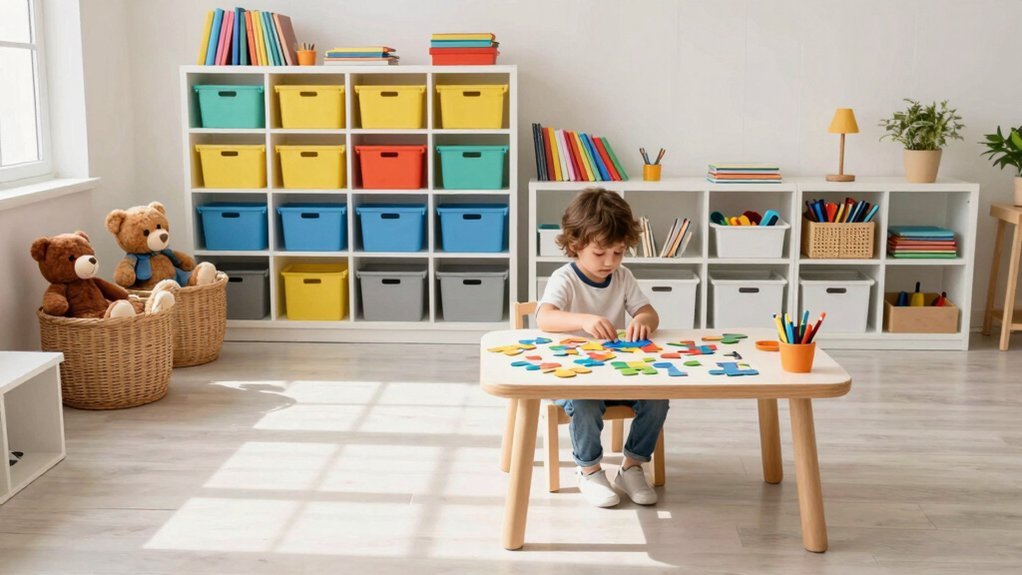
Why does a tidy room make it easier for kids to stay focused? When you clear away excess toys and papers, you cut visual noise that competes for attention. Organized spaces let children locate crayons, books, or worksheets instantly, so they spend less time searching and more time engaged. A clean desk shortens the transition between activities, sustaining momentum on a single task. Calm surroundings also ease emotional strain; fewer distractions mean lower stress, which supports better regulation and concentration. Designating zones for reading, writing, and crafts guides the mind to the current activity, reinforcing focus. By maintaining an orderly environment, you give kids the structure they need to stay on task and absorb information efficiently. Using open-access shelves that are child-height and clearly organized can further enhance focus by promoting independence and reducing clutter.
How Declutter Boosts Attention: Key Research Findings
Ever wonder how a clutter‑free desk can actually boost a child’s attention span? When you clear away excess items, you reduce visual noise that otherwise drains mental energy. Research shows that less clutter means kids spend less time searching for supplies, so they can stay on a task longer without interruption. A tidy layout lets them grab the right material instantly, smoothing the start‑to‑finish flow and cutting fatigue.
Studies also link organized spaces to calmer moods and stronger executive‑function performance, which together support sustained focus. By minimizing distractions, you create a learning environment where attention flourishes, and the child feels more in control of their work. This simple decluttering step directly translates into measurable gains in concentration and task persistence. Step stools with safety features like non-slip surfaces and rails can further enhance a child’s confidence and independence in a well-organized space.
Simple Labeling Systems for an Organized Kids Learning Space

You’ll notice that bright, color‑coded bins paired with clear picture or word labels give kids instant visual cues about where everything belongs.
When the labels are easy to read, children can locate and return items without asking for help, keeping them focused on the task at hand.
Consistent labeling across the room builds a routine that makes progressions smoother and encourages independent organization.
Incorporating items designed with developmental benefits in mind supports children’s growing confidence and motor skills as they organize their learning space.
Visual Cues
How do simple labeling systems transform a kid’s learning space? You’ll notice that visual cues—picture labels, icons, and clear symbols—guide children instantly to the right spot. When a bin shows a dinosaur picture for blocks, the child knows where to put them without guessing, cutting cleanup time and sharpening focus. These cues create predictable routines, signaling where supplies live and supporting executive function.
Kids gain independence, locating crayons or worksheets on their own and returning items without adult prompts. Clear visual boundaries between study and play zones reduce visual clutter, helping neurodivergent learners stay on task. Consistent labeling across home, school, and therapy spaces reinforces habits, making organization a seamless habit rather than a chore.
Color‑Coded Bins
Why not let color do the heavy lifting? You can assign color-coded bins to every subject, so a quick glance tells a child where math worksheets belong and where storybooks live. The vivid hues cut search time, especially for neurodivergent learners who thrive on visual cues. When you keep the same palette on shelves and carts, memory cues stay consistent, making transitions smoother and distractions fewer.
A red bin for manipulatives, a blue bin for reading material, and a green bin for art supplies instantly signal boundaries, encouraging independent cleanup and longer on‑task periods. By pairing visual labeling with distinct colors, you reduce mental effort, boost task initiation, and help kids stay focused without extra instructions. Incorporating tools like the COSYLAND Adjustable Toddler Kitchen Helper Stool, designed for growth and versatility, can further create an organized, focused learning environment.
Easy‑Read Labels
Ever notice how a quick glance at a clear, picture‑filled label can turn chaos into calm? When you attach easy‑read labels to bins and shelves, kids instantly know where crayons, worksheets, or science kits belong. The visual cue cuts search time, letting them stay in the flow of a lesson instead of wandering for supplies.
Pairing bright colors with simple words creates distinct zones for reading, math, or art, so switching tasks feels natural. Place the labels at child eye level and choose wipe‑able, durable material; they’ll survive spills and daily use. This independence lets children tidy up on their own, reinforcing routine and responsibility while keeping the learning space organized and focused.
Creating Dedicated Learning Zones in an Organized Kids Space

When you set up clear zones for each task, your child instantly knows where to work, play, or rest.
Adding visual cues like color‑coded bins and labeled shelves lets them grab the right supplies without hesitation.
Accessible storage keeps everything within arm’s reach, so the workspace stays tidy and the focus stays sharp.
Incorporating portable storage solutions designed for easy organization supports smooth transitions between activities and environments.
Clear Zones for Tasks
How can a room feel more like a series of purposeful stations than a chaotic jumble? You’ll notice that clear zones for tasks turn a mess into a roadmap for learning.
When you set up a homework desk, a reading nook, and a craft area, each zone houses the supplies it needs—pens, books, glue sticks—so kids spend less time hunting and more time working.
Trays, bins, and color‑coded shelves act as visual boundaries, reinforcing what belongs where and making cleanup instinctive.
For neurodivergent middle‑schoolers, these defined zones lower cognitive load and support emotional regulation, letting them stay engaged longer.
Visual Cues for Materials
What if a simple picture on a bin could turn a chaotic shelf into a clear‑cut learning station? You can use visual cues—labeled bins, picture icons, color‑coded drawers—to help kids instantly spot crayons, books, or scissors. When you set up dedicated learning zones, each area houses only the supplies it needs, so the visual noise drops and focus rises. Clear boundaries keep a reading corner from spilling into a craft station, allowing smoother transitions and longer engagement. Consistently applying visual cues across the home, classroom, or study nook builds familiarity, reduces anxiety, and encourages independent retrieval and return of materials. The result is a predictable environment that supports sustained attention and effortless task initiation. Using tools like the Fisher-Price 4-in-1 Activity Table/Art Easel can further enhance organization and engagement in toddler learning spaces.
Accessible Storage Solutions
Ever wonder how a low‑shelf or a set of color‑coded bins can turn a chaotic corner into a focused learning zone? When you place accessible storage at child height, kids pull out crayons, books, or puzzles without your help. The bins’ bright colors and clear labels cut the time spent searching, so they jump straight into the task.
You can carve out reading, crafts, and desk zones, each with its own labeled containers, reinforcing routines and keeping visual noise low. Regularly tidy the shelves, and children will feel confident navigating the space, transitioning smoothly between activities. This independence fuels longer, calmer participation, turning a simple room into a productivity‑boosting learning hub.
Choose Low‑Shelf Storage to Foster Independent Access
When you place everyday items on low shelves, kids can reach them without help, which boosts their independence and focus. By positioning favorite toys, books, and supplies within arm’s length, you let children locate what they need instantly, cutting down on interruptions.
Easy-to-reach bins labeled at eye level turn organization into a visual cue, so kids know exactly where each item belongs. This setup supports consistent routines; they can tidy up independently, reinforcing responsibility and ownership.
The low-shelf design also encourages them to choose materials on their own, fostering decision-making confidence. As they handle their belongings directly, they develop a sense of control that translates into sustained attention during learning activities.
Choosing storage with 360-degree rotation capability further enhances accessibility by allowing children to easily reach all compartments from any angle.
Lighting Tips for an Organized Kids Learning Space
Placing toys on low shelves lets kids grab them independently, but the next step is ensuring the light they work under supports that focus. Good lighting can calm mood, reduce visual strain, and keep attention steady. Choose fixtures that let you dial brightness up or down, and favor natural or soft, diffuse sources over harsh fluorescents. Recessed lights cut glare, while dimmable LEDs let you tailor illumination for reading, crafts, or quiet play. Balancing visibility with comfort helps kids stay engaged without feeling overstimulated.
- Install dimmable LED panels near the work area.
- Use a soft, diffused floor lamp for reading corners.
- Position a window with sheer curtains to let in natural light.
- Add recessed lighting to eliminate glare on tables.
- Choose warm‑tone bulbs (2700‑3000 K) for a calming atmosphere.
Acoustic Solutions for a Quiet, Organized Kids Space
How can you keep a kids’ learning area calm and focused when the world outside is noisy? Start by adding sound‑absorbing panels and plush carpeted zones; they cut echo and turn chaotic rooms into peaceful, predictable spaces.
Add sound‑absorbing panels and plush carpet zones to turn noisy spaces into calm, focused learning environments.
Insulate walls and strategically separate active play corners from quiet reading nooks to lower ambient noise.
Pair these acoustic tweaks with soft, diffused lighting—together they soothe mood and sharpen attention.
Remember that noise can trigger sensory overload, so targeted design minimizes distractions that derail learning.
Involve facilities staff, teachers, and therapists early, ensuring every acoustic choice supports therapy goals and daily routines.
When you align panels, flooring, and wall treatments, you create consistently focused environments across all learning spaces.
Calming Color Schemes for an Organized Kids Learning Space
Ever wondered why a soft, muted palette can make a learning area feel more inviting and less chaotic? You’ll notice that calming color schemes—pastels, muted blues, and gentle greens—dial down visual overstimulation, helping kids regulate mood and stay focused. Cooler tones naturally boost attention, while a cohesive palette of two to four colors cuts visual noise, making task initiation smoother. Color‑coding zones, like blue for reading and green for writing, gives instant visual cues that streamline organization. Pairing these hues with natural light and warm‑neutral walls creates a welcoming, low‑stress environment that supports consistent learning performance.
- Choose 2–4 complementary pastel shades
- Assign a specific hue to each activity zone
- Use muted blues for reading corners
- Apply soft greens in writing or art areas
- Blend natural light with warm‑neutral walls for balance
Step‑by‑Step Declutter Routine for Busy Parents and Kids
You’ll notice how a quick daily tidy‑up, a simple three‑bin system, and clear labels turn chaos into a focused learning zone.
By setting a 15‑minute routine and a monthly deeper clean, you keep clutter from building up and teach kids independence.
Prioritizing tools and zones each day makes the whole process feel effortless and sustainable.
Decl Prioritizeitize
Ever feel overwhelmed by a chaotic desk that steals your child’s focus? You can turn that mess into an organized space by prioritizing high‑use zones first. Start with the study desk, then move to the supply shelf, and finally tackle the floor area. A quick 15‑minute sweep each evening stops clutter from piling up, keeping distractions low and focus high. Involve your kid in labeling bins and returning items; they’ll feel ownership and learn to manage their own learning area.
- Identify the top three zones you use daily.
- Set a timer for 15 minutes and clear each zone.
- Sort items into “keep,” “store,” and “donate” piles.
- Return kept items to clearly labeled bins or shelves.
- Review the list with your child and adjust as needed.
ToolsStep
After sorting the high‑use zones, the next step is to follow ToolsStep’s clear, five‑stage routine that lets both parents and kids tackle clutter without feeling overwhelmed.
First, you sort items into keep, donate, or discard piles, using the provided time guide to stay on track.
Next, you involve children in donating toys they no longer use, reinforcing empathy and responsibility.
Then, you label containers with simple words or pictures, turning storage into a visual cue that supports organized spaces.
After labeling, you zone the area, assigning specific functions to each sector so kids know where everything belongs.
Finally, you store items in the labeled bins, checking off a printable checklist to confirm completion.
This structured approach cuts visual noise, builds habits, and boosts focus for neurodivergent learners.
Ize Routine Daily
Ever wonder how a five‑minute tidy‑up can keep chaos at bay? You can turn a quick declutter into a habit that steadies your child’s focus and keeps the family space functional. Start with a timer, pick a hotspot, and guide your kid to put items in labeled bins. Keep the routine short—5 to 10 minutes—to avoid overwhelm, and repeat it daily so the habit sticks. When home and school routines echo each other, predictability boosts confidence, especially for neurodivergent learners.
- Set a timer for five minutes each morning.
- Identify the clutter hotspot (desk, floor, toy bin).
- Use clear, labeled containers for quick storage.
- Involve kids: let them decide where items belong.
- Review and adjust the routine weekly for smooth flow.
Budget‑Friendly Storage That Works
A budget‑friendly storage system starts with affordable containers, low‑cost bins, and simple shelving that keep the space tidy without breaking the bank. You can pick clear plastic boxes, repurposed shoe organizers, or inexpensive fabric bins that slide onto shelves. Label each piece with bright stickers or a marker so kids know where everything belongs.
Use open shelving to display books and toys, reducing visual clutter and encouraging quick retrieval. Add drawer inserts or shelf dividers to fit items snugly, maximizing every inch without buying more furniture. Choose a cohesive color palette—neutral tones with a few accent hues—to keep the room looking neat while staying practical.
How to Tell If Focus Improves?
So, how can you tell if your child’s focus actually improves in an organized space? Look for longer work periods, fewer interruptions, and quicker task starts. Notice if they finish projects without constantly searching for supplies. Track changes in mood when the desk stays clutter‑free, and compare grades or quiz scores before and after you implement organization strategies.
- Observation logs: Record start‑to‑finish times for each activity.
- Error count: Count mistakes or re‑reads; fewer errors signal better concentration.
- Engagement duration: Time how long they stay on a task without drifting.
- Self‑report: Ask them how easy it feels to begin work.
- Performance metrics: Compare test results or worksheet accuracy pre‑ and post‑organization.
These concrete signals let you gauge whether the tidy environment truly boosts focus.
Daily Habits to Keep the Kids Learning Space Calm and Productive
Seeing the gains in focus, the next step is building daily habits that keep the learning space calm and productive. Start each morning by clearing the desk: put away yesterday’s worksheets, stash pens in labeled bins, and wipe the surface. Encourage kids to return items to their color‑coded zones—study, reading, crafts—so the room stays organized spaces and visual clutter stays low. Schedule a five‑minute “reset” after each activity; they can sort supplies, check that bins are correctly labeled, and tidy any stray papers. Use a timer to limit searching time, reinforcing the habit of knowing exactly where materials live. End the day with a quick sweep, placing books back on shelves and stacking finished work in a “done” tray. Consistent micro‑routines keep the environment calm, boost efficiency, and sustain focus.
Frequently Asked Questions
What Are the Benefits of an Organized Space?
You’ll feel calmer, find things faster, and stay on task longer; organized spaces cut distractions, lower stress, boost independence, and make shifts smoother, so learning and play become more focused and enjoyable.
What Is the 10-10-10 Rule for Kids?
You use the 10‑10‑10 rule by pausing, then weighing the outcome in the next ten minutes, ten months, and ten years, helping you choose actions that support immediate, short‑term, and long‑term goals.
Why Is Space Important for Children?
You need space because it shapes how you feel, think, and learn; a well‑organized environment reduces distractions, eases sensory overload, and gives you clear pathways that nurture concentration and confidence.
How to Increase Children’s Focus?
You can boost children’s focus by creating tidy, labeled zones, using color‑coded storage, minimizing visual clutter, setting clear routines, and providing easy‑access tools that reduce search time and distractions.