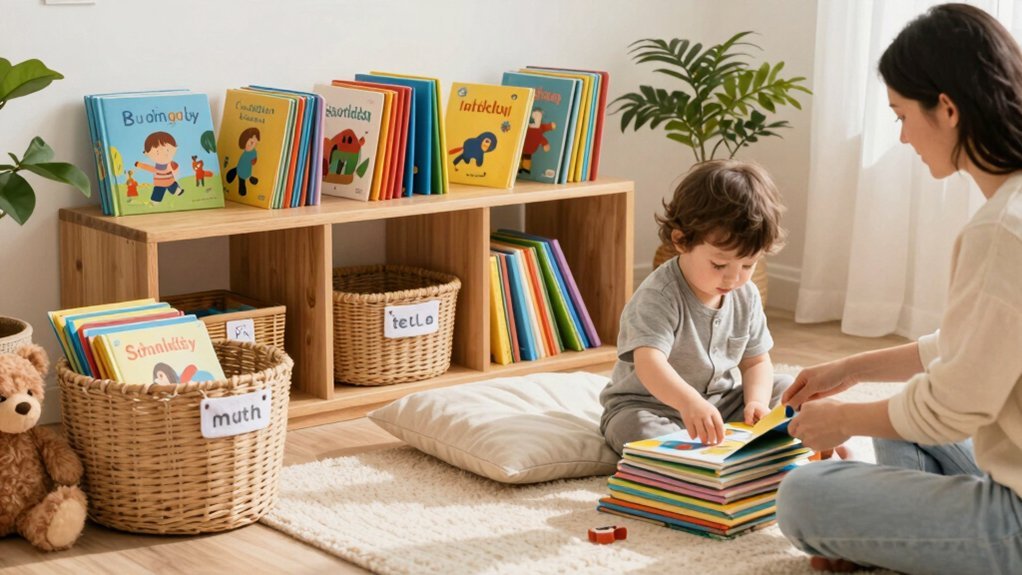
Set up low, child‑friendly shelving or choose a school‑style bookcase with outward‑facing displays, then add sturdy, colorful bins or baskets at floor level. Group books by clear themes—animals, bedtime, seasons—and sort each theme by size, keeping board books at the bottom and picture books a step up. Use three low bins with simple picture or word labels, rotating two books each week from a reserve stack. Create a cozy reading spot with a padded mat, a child‑size lamp, and plush “book‑guards.” Finally, teach a quick daily tidy routine using eye‑level bins, color‑coded baskets, and a visual checklist, and you’ll discover even more ideas as you continue.
Set Up Low Shelving for Toddler Books
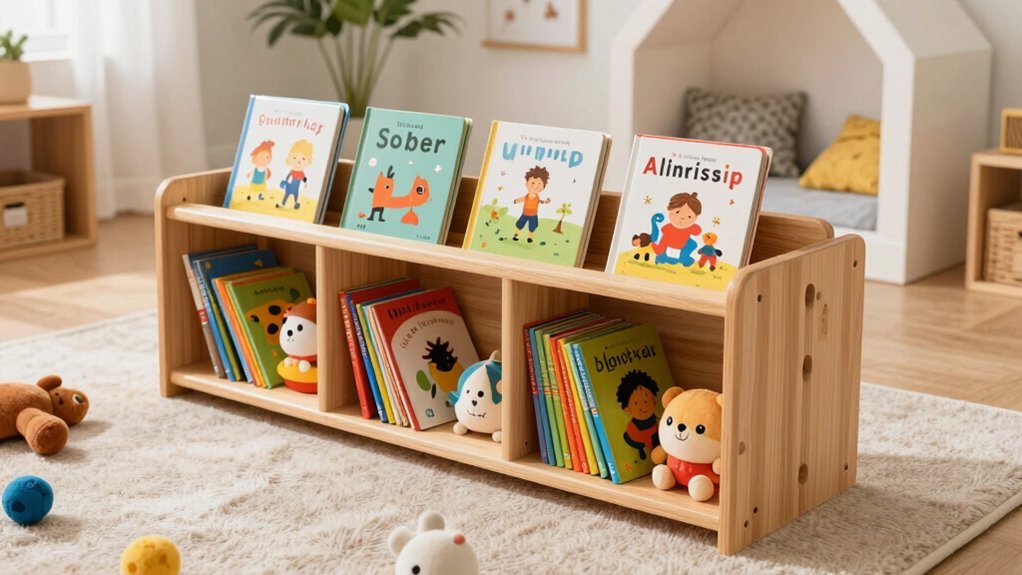
How can you make books instantly reachable for a curious toddler? You’ll start by installing toddler shelving that sits at a child‑friendly height, using low shelves that keep the most‑used titles within arm’s reach. Choose a school‑style bookcase with outward‑facing displays and add sturdy, colorful bins or baskets on the floor or beside the shelves.
Arrange the books by size: larger picture books go at the front, while smaller board books tuck toward the back, making browsing effortless. Rotate a small, featured set of titles weekly to spark fresh interest and prevent clutter. This simple book organization strategy encourages independence, lets kids pull out and return books easily, and keeps the reading area tidy and inviting. Pairing this setup with a Montessori-friendly step stool can further support your toddler’s independence in accessing books and other learning materials.
Sort Toddler Books by Theme and Size
Ever wondered how a tidy, themed shelf can turn reading time into a mini adventure for your toddler? Start by grouping books into clear themes—animals, bedtime, seasons—so toddlers can spot their favorite story world instantly. Then sort each theme by size and format; keep sturdy board books at the very bottom where tiny hands can grab them, and place larger picture books a step up. Arrange the themed piles at eye level on low shelves or bins, giving toddlers independent access. Keep a rotating subset of beloved titles within easy reach, and stash less‑used books in a separate bin to cut clutter. Spend 10‑15 minutes each week reassessing the collection, removing disengaged titles and making room for fresh themes. This simple organizing strategy makes browsing effortless and encourages a love of reading.
Rotate Bins and Add Simple Labels to Keep Books Tidy
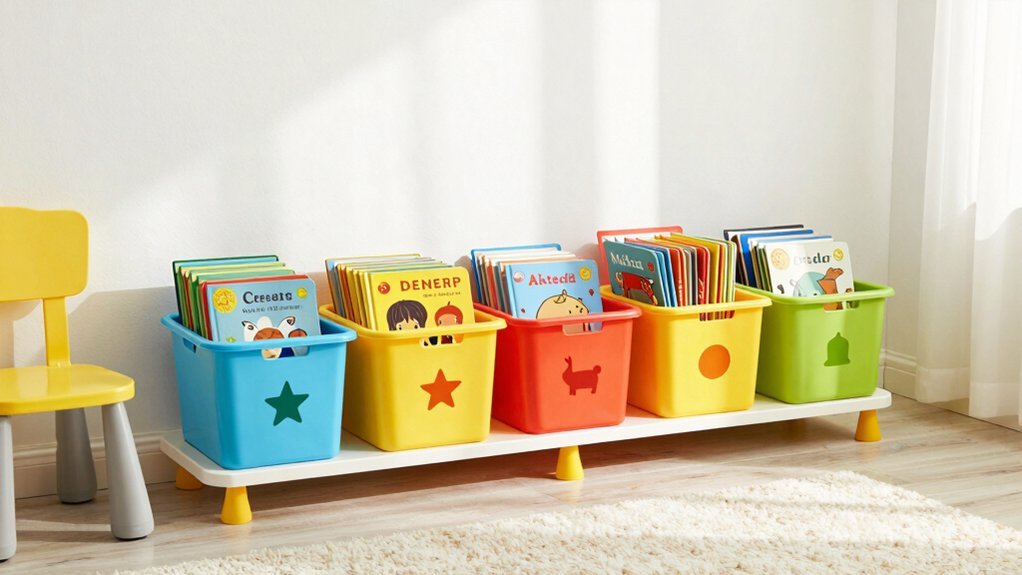
A rotating bin system keeps your toddler’s library fresh, swapping out a few titles each week so the same stories don’t get stale. Place three low‑height bins where your child can reach them, then assign a simple label to each—either a word or a picture—that tells what’s inside. Schedule a weekly rotation: pull out two books, replace them with two from a “reserve” stack, and update the label if needed. This routine keeps the collection tidy, encourages independence, and prevents boredom. Using tools with ergonomic handle design encourages comfort and reduces fatigue during activities.
| Bin # | Label (Word/Picture) | Sample Themes |
|---|---|---|
| 1 | Animals 🐾 | Farm, Zoo |
| 2 | Numbers 🔢 | Counting, Shapes |
| 3 | Stories 📖 | Fairy‑tale, Adventure |
| 4 | Feelings 😊 | Emotions, Social |
| 5 | Nature 🌱 | Plants, Weather |
Build a Snug, Kid‑Friendly Reading Spot on the Shelf
Ever wonder how a low‑height, outward‑facing bookcase can turn a simple shelf into a cozy reading nook for your toddler? Place a soft cushion or a padded mat right in front of the shelf, then line the edge with colorful bins and baskets that hold the day’s featured titles. Keep the bins low so toddlers can pull a book out and slide it back without help. Add a small, child‑size lamp that casts a warm glow, and use a few plush toys as “book‑guards” to make the spot feel inviting. Rotate the displayed books weekly, labeling each bin with simple pictures or a Dewey‑inspired tag. This arrangement turns the shelf into a tidy, accessible reading nook that encourages independent exploration and effortless organization.
Teach Kids a Quick Daily Tidy Routine for Their Books
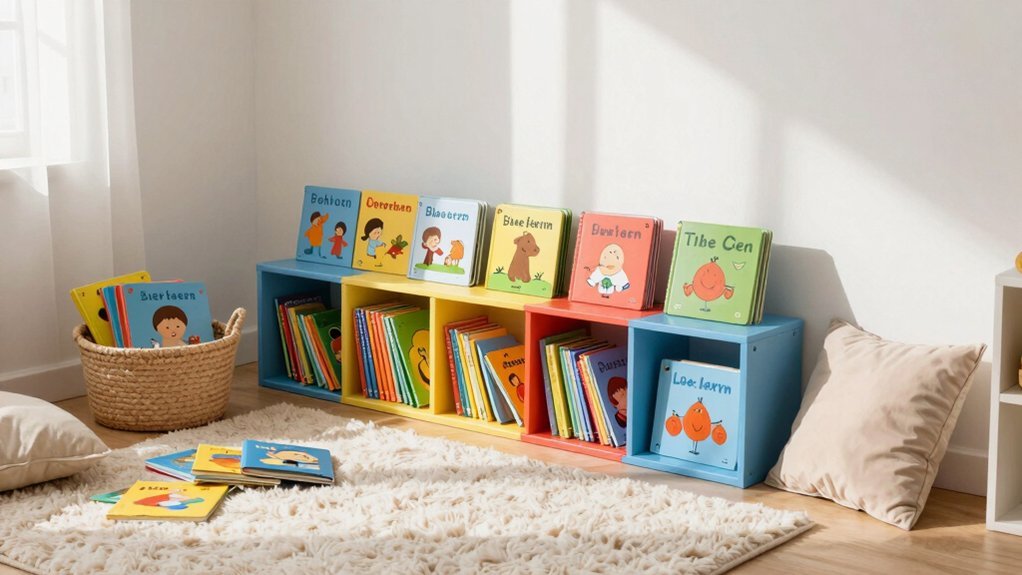
How can you turn a simple book‑return into a fun, one‑minute habit? Start by setting a clear, daily tidy routine: after each reading session, toddlers place the book in a low, eye‑level bin or shelf. Use color‑coded baskets for different areas, so they know exactly where each story belongs. Add a visual reminder—like a picture checklist on the wall—to guide them through the steps. Keep the selection rotating; each week, remove damaged or rarely used titles to keep the display inviting. Praise them when they finish the routine within a minute, reinforcing the habit. Over time, this quick, consistent practice builds strong book organization skills and a tidier space for everyone. Choosing storage options with low step-in access can make it easier and safer for toddlers to reach their books independently.
Frequently Asked Questions
How Do I Prevent Books From Falling off Low Shelves?
Put a thin rubber mat or non‑slip shelf liner on the shelf, then arrange books upright and add small, low‑profile dividers or a shallow box to keep them from sliding off.
What Safe Materials Can I Use for Child‑Friendly Storage Bins?
You can use BPA‑free plastic, untreated hardwood, silicone, or fabric reinforced with reinforced stitching. Choose sturdy, rounded‑edge bins, avoid toxic paints, and ensure any fabric is washable and free of loose threads.
How Often Should I Rotate Books to Keep Toddlers Interested?
You should rotate the books every two to three weeks, swapping out a few titles each time. This fresh mix keeps toddlers curious, prevents boredom, and encourages continuous exploration of new stories.
Can I Incorporate Sensory Elements Into the Reading Area?
Yes, you can add sensory elements—like textured mats, soft pillows, and scented stickers—into the reading area, creating tactile and olfactory experiences that keep toddlers engaged while they explore books.
What Age‑Appropriate Labeling Style Works Best for Toddlers?
You should use large, picture‑based labels with bold colors and simple words, placing them at child height. Stick them on shelves or bins, and keep the design consistent so toddlers can quickly recognize where each book belongs.