
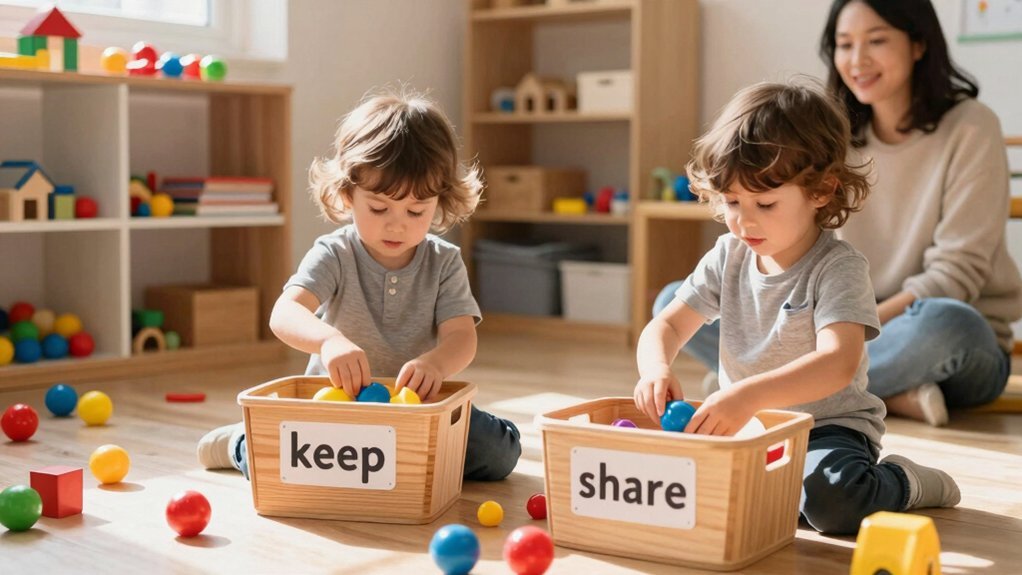
Give your child a set number of bins—say five to ten—to pick as their daily play favorites, then place labeled bins at eye level for them to point, name, and justify each choice. Gather all toys, sort them into categories, and let your child decide which groups need reduction, moving the rest to donation or trash bins. Rotate the kept items every few weeks using low, clear storage and a simple purge window, and keep the setup Montessori‑style with pictorial cues so they stay independent and engaged, and you’ll discover even more strategies ahead.
Set Up a Kid‑Friendly “I‑CHOOSE‑TO‑KEEP” Rule for Child‑Led Decluttering

When you introduce the “I‑Choose‑To‑Keep” rule, you give each child a clear, limited number of toys—say five to ten—to select, which cuts down overwhelm and builds ownership. You set up labeled bins that sit at eye level, so the child can point, name, and justify each choice, sharpening decision‑making. Items left behind travel to a donation or resale pile, reinforcing the idea that letting go helps others. For pieces that spark nostalgia but don’t make the cut, create a memory box; the child can store a photo or a small token, preserving sentiment without clutter. Rotate the kept toys every few weeks, swapping them with the donation bin so the collection stays fresh and the child practices the i‑choose‑to‑keep process regularly. Using tools like a Montessori step stool can empower children to independently access and organize their toys during this process.
Sort Toys by Category for Child‑Led Decluttering
Ever wondered how a quick visual sweep can turn chaos into order? You gather every toy into one spot, then sort by category—dolls, building sets, vehicles—so the whole collection shines before you decide what to keep or donate. Reassemble sets, keeping complete units together, and label three bins: keep, donation, trash. Invite your child to negotiate which categories need reduction, explaining how fewer items make cleanup easier and play spaces more meaningful. As you sort, set aside anything that no longer sparks interest or creates clutter. This child‑led process lets your kid see the impact of each decision, turning declutter toys into a collaborative, organized adventure. Incorporating color-coded sorting boxes can enhance the organization and learning experience during toy decluttering.
Create a Rotation System for Child‑Led Decluttering

After sorting toys into categories, pick the 5–10 favorites that stay out for daily play and place the rest into one to three labeled rotation bins. You’ll then set a purge window—usually two to four weeks—to review each bin. Involve your child in the review; let them explain why a toy stays or swaps out. This child‑led rotation keeps minimal clutter while preserving play value. When a set feels complete, such as a Lego kit or doll family, move it together to maintain ownership feelings. Repeat the cycle every few weeks, purging items that never spark interest. Over time, the system declutters without feeling restrictive, and your child enjoys fresh, organized play spaces. Incorporating Montessori color sorting toys can add an educational dimension to the rotation bins while keeping children engaged.
| Bin | Review Frequency |
|---|---|
| Bin 1 | 2 weeks |
| Bin 2 | 3 weeks |
| Bin 3 | 4 weeks |
| Bin 4 | Optional |
| Bin 5 | Optional |
Design Age‑Appropriate Storage for Child‑Led Decluttering
How can you create storage that grows with your child’s abilities? Start with low, open shelves and clear bins for toddlers, then transition to labeled cubbies or hidden cabinets as they age. Keep accessibility simple by limiting top‑accessible toys to 5–10 favorites, stored in reachable baskets marked with picture cues or words. Use a rotation system: place 5–10 favorites out, stash the rest in 1–3 bins, and let your child choose which stay each cycle. This child‑led approach reinforces organization and makes decluttering a routine. Group related items in dump‑friendly containers so cleanup stays under ten minutes. By adjusting storage height, labeling style, and bin count, you ensure age‑appropriate, functional solutions that support independent play and tidy habits. Incorporating elements like the Self Care Facial Recognition Puzzle Mirror can further support developmental exploration and self-awareness during playtime.
Make the Space Montessori‑Friendly and Easy to Keep Organized
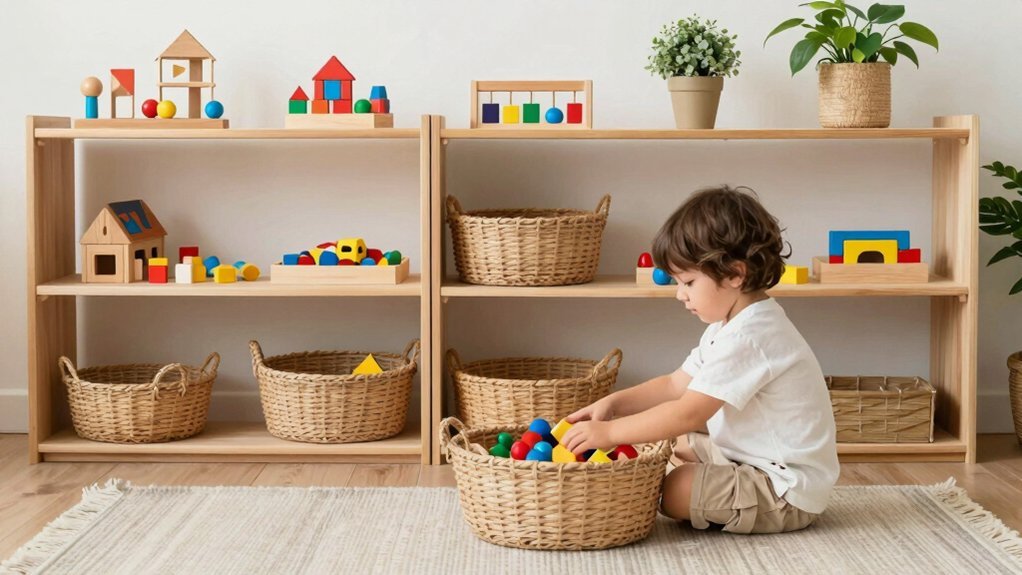
What if you could turn every corner of the playroom into a self‑directed learning zone? Use low, open shelving and labeled bins at child eye level so kids can see and grab what they need, reinforcing a Montessori vibe. Group similar activities—blocks, dress‑up, art—into distinct zones, then apply a rotation system: keep 5–10 favorite toys out and store the rest in labeled tubs that you swap every few weeks. Clear containers and pictorial visual cues help children know where each item belongs, making toy organization intuitive. Establish a return‑to‑bin routine and practice independent cleanup daily; the habit becomes predictable, and the space stays tidy without constant adult intervention. This child‑led approach declutter toys while fostering responsibility and order. Including educational items like Montessori Life Cycle Cards can further enrich the playroom’s learning atmosphere and keep children engaged with natural science concepts.
Frequently Asked Questions
What Is the 5 5 5 Rule for Decluttering?
You follow the 5‑5‑5 rule by letting your child pick five toys to play with now, five to rotate out of sight, and five to keep permanently, simplifying choices and cleanup.
What Is the 20 Toy Rule?
You limit your child’s active toys to about twenty, letting them pick favorites and rotate the rest. The excess goes into storage, donation, or sale, encouraging ownership and easier tidy‑up.
What Is the 50% Rule in Decluttering?
You keep roughly half the toys you own, donating or selling the other half. This 50 % rule forces you to halve each category—say 20 items become 10 kept, 10 removed—preventing excess clutter.
How Do I Declutter My Child’s Toys?
Gather all toys, then let your child pick 5‑10 favorites to keep. Rotate the rest into bins, place “maybe” items in a bag for a week, and donate anything broken or unused.