Set up laminated visual cues on a schedule, using picture icons and color‑coded timers so you can see steps at a glance. Keep the anchors in the same eye‑level spot and add a new choice every week or two, placing it next to the old ones with a simple token or timer signal. Celebrate each independent step with a quick high‑five and a brief reflection, and you’ll discover even more ways to boost autonomy.
Create Simple Visual Anchors for Independent Choice‑Making Routines

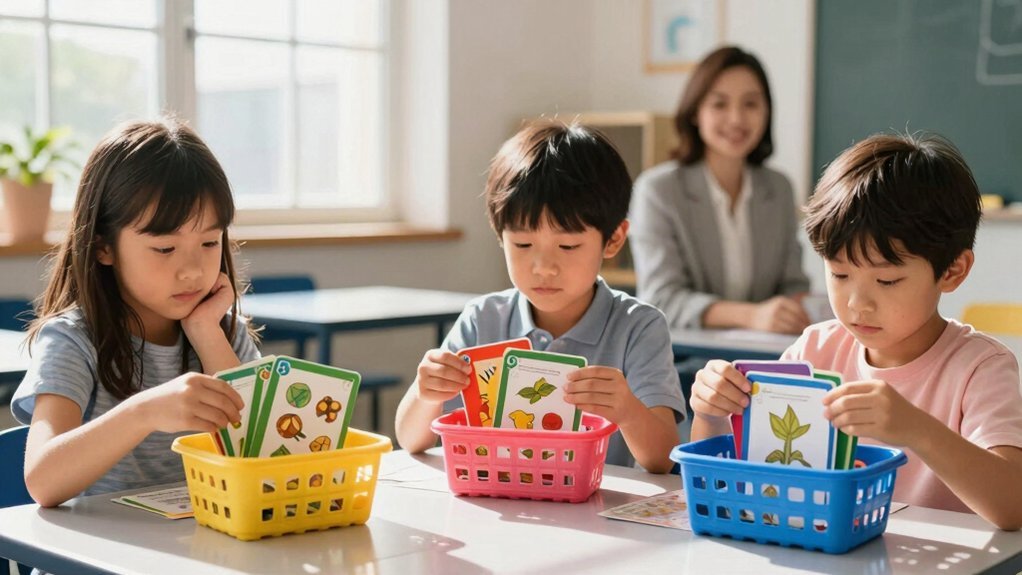
Ever wonder how a quick glance can keep a child on track? You can set up visual anchors that show each step of an independent choice‑making routine—pick a task, decide a method, finish in time. Use laminated cues on a visual schedule so the picture icons guide the child without heavy reading. Place the anchors at eye‑level and keep them in the same spot; this reduces cognitive load and speeds up cues for transitions. Add a color‑coded timer—green for go, yellow for in‑progress, red for finished—to signal when a decision is happening and when to move on.
Employ three‑choice boards for simple, repeatable sequences, and gradually fade prompts as autonomy support grows. Using low step-in storage solutions can further encourage independent cleanup by making toys easily accessible and reducing the need for climbing or reaching.
Expand Choices Gradually While Keeping Routines Predictable
After setting up visual anchors that cue each step, you can start widening the decision space by adding new options one at a time.
Visual anchors guide steps; gradually expand choices, adding one option at a time.
Begin with two or three predictable routines, then introduce a fourth choice every one to two weeks.
Use visual supports to display the new option beside the existing ones, and attach a measurable cue—like a timer or token system—to keep the routine predictable.
Schedule the addition during low‑stress timing, avoiding transition periods, so the child feels secure.
Conduct engagement monitoring: note which selections are made and how attention changes.
Adjust the pace based on this data, employing consistency management to ensure the expansion feels smooth, not chaotic, while reinforcing independent choice‑making.
Choosing supportive tools such as a Montessori-friendly step stool can further enhance the child’s ability to independently engage in everyday routines.
Reflect and Celebrate to Strengthen Independent Habits

How can you turn a simple daily routine into a powerful habit‑building tool? Start each day by asking, “What went well today?” to spark reflection on choice‑making and reinforce autonomy. Pair that with data tracking—tick off completed daily tasks on a checklist so the child sees concrete evidence of progress. Celebrate specific independent habits, like starting homework without prompts, with a quick high‑five or a small reward. This positive reinforcement boosts self‑efficacy and makes routines feel rewarding. End the day with a brief reflection session, noting successes and planning tomorrow’s adjustments. Regularly scheduled celebrations link small wins to larger goals, cementing autonomy and strengthening independent habits over time. Choosing the right environment, such as a comfortable reading nook with storage, can also encourage children to engage more consistently with their routines.
Frequently Asked Questions
How to Teach Choice Making in Aba?
You teach choice making by presenting two clear options with visual icons, using a consistent prompt hierarchy, reinforcing each decision with brief praise, and fading prompts while tracking selections across settings.
How to Build a Personal Routine?
Start by picking one small habit you want, then map its steps on a visual checklist, set a timer for each part, and adjust the order or cues until you feel confident following it daily.
What Are Functional Routines for Autism?
You’ll find functional routines for autism are structured, step‑by‑step task analyses that break daily activities into clear, visual‑supported stages, using consistent cues, reinforcement, and caregiver data to promote independent completion.
How Do You Encourage Independence and Choice?
You boost independence by giving clear, limited options, using visual cues, setting short timers, letting them try tasks solo, then reviewing outcomes together, so they see results and feel confident choosing next time.