

When you constantly correct a child’s mistakes, you can squash their enthusiasm and make them feel inadequate, turning learning into a source of shame. Over‑correction shifts focus from effort to perceived flaws, eroding confidence and discouraging risk‑taking. Instead, use process‑focused cues—like asking “What happened next?” or highlighting a strategy that worked—to nurture persistence and optimism. This gentle, self‑correcting approach builds a supportive environment, and the next sections will show you how to apply it in everyday life.
How Over‑Correction Hurts Kids (and How Self‑Correcting Toys Help)
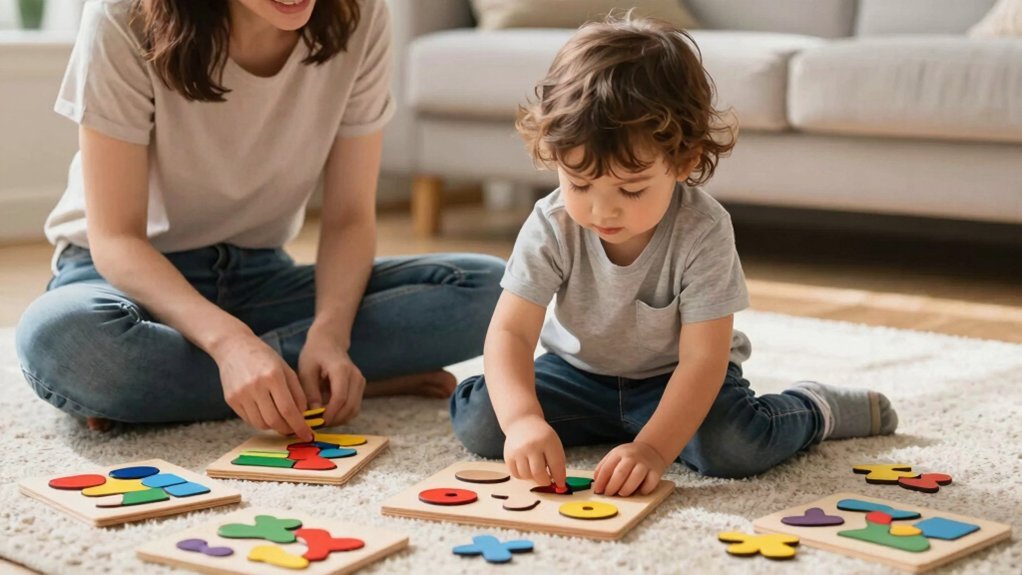
Why does it matter when a child’s mistake is met with constant correction? You’ll notice the child’s enthusiasm dip as excessive correction erodes motivation and sparks low self‑worth. Instead, a safe, non‑defensive learning space lets them explore without shame. Self‑correcting toys fill that gap: they give instant feedback, highlighting what works and what doesn’t, so the child can adjust on the fly. When a puzzle piece doesn’t fit, the toy signals the error, prompting the child to try a new approach rather than feeling judged. Process‑focused cues from these toys boost persistence and optimism, unlike person‑focused critiques that stall confidence. Multi‑shape and nesting puzzles illustrate how age‑appropriate, self‑correcting design nurtures sequential problem‑solving and builds lasting confidence. Just like Montessori tools encourage independent learning, self-correcting design in toys supports children’s natural curiosity and development.
What the Research Says About Process Praise vs. Person Criticism?
When a child’s mistake meets a gentle prompt instead of a harsh label, the feedback shapes how they view their own abilities. Research shows that process praise—highlighting effort, strategy, or improvement—boosts optimism and fuels higher effort. In contrast, person criticism, such as calling a child “lazy,” erodes self‑perceived ability and curtails persistence. Kamins and Dweck found that children who hear process‑oriented feedback tackle problems more readily, while person‑focused remarks push them away from challenges. Early praise for innate traits predicts a fixed mindset and lower motivation later on. By consistently offering process praise, you nurture resilience, encourage growth‑oriented thinking, and help children see setbacks as opportunities for learning rather than proof of personal flaw. For example, tools like Montessori-friendly timers help support positive transitions and foster independence, reinforcing a growth mindset through structured encouragement.
Self‑Correcting Toys: Science Behind Process Praise
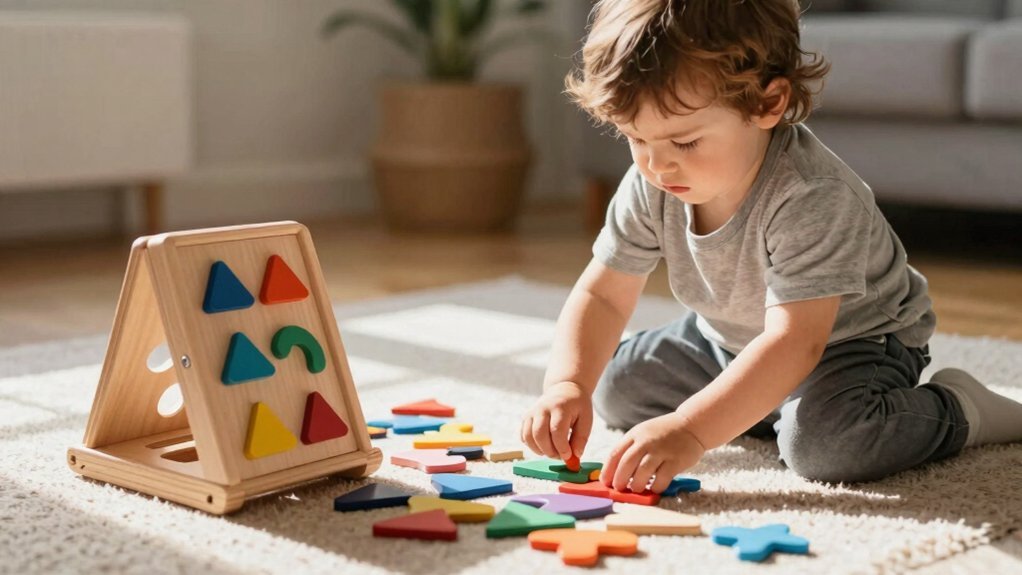
Ever wonder how a simple toy can turn a slip‑up into a growth moment? When you hand a child a self‑correcting puzzle, the piece clicks only when it fits the right slot, giving instant feedback that distinguishes success from error. This built‑in error control removes ambiguity, so the child sees the correct solution without adult prompting. Early examples—Multi Shape Puzzle, Insect Puzzle, Shape Matching Cards—use visual and tactile cues that guide sequential problem‑solving. As the child manipulates nesting or stacking boards, the toy’s design nudges them toward the intended outcome, reinforcing process praise. You’ll notice increased self‑directed learning, alignment with developmental milestones, and fewer interruptions for adult correction. Incorporating lightweight and comfortable wear in toys and costumes enhances children’s engagement and sustained imaginative play.
Practical Strategies for Turning Mistakes Into Learning Moments
Self‑correcting toys show how a child can spot an error on their own, but the real growth happens when you turn that moment into a guided discovery. You can keep the focus on the process, not the child’s worth, by asking “What happened next?” and offering gentle hints. Celebrate the strategy they tried, then model an alternative approach. Keep feedback specific—point out the step that worked and the one that didn’t—so they see cause and effect. Use the gardener model: intervene only when the child is stuck, letting them experiment before you step in. This builds autonomy, resilience, and a love of problem‑solving.
- Pose open‑ended questions about the mistake.
- Highlight the effective part of their strategy.
- Suggest a small tweak and let them try again.
- Praise the effort and the reasoning process.
Gentle Guidance Without Shaming: When & How

You’ll notice that praising the effort you put in, rather than just the result, keeps you motivated and open to trying again.
When a slip happens, ask yourself open‑ended questions like “What could I try differently next time?” to turn the moment into a problem‑solving opportunity without feeling shamed.
This approach builds trust and sustains your confidence in the learning process.
Engaging children with toys that encourage fine motor skill development can reinforce this positive learning mindset in practical ways.
Emphasize Effort Over Outcome
Why does focusing on the effort a child puts into a task matter more than the final result? When you highlight the steps they tried, you nurture a growth mindset and keep motivation high. Process‑focused praise signals that you value learning, not just success, so children keep trying even after setbacks. It also reduces fear of judgment, letting them experiment with strategies and develop resilience.
- You say, “I love how you kept trying different ways to solve the puzzle,” instead of “You’re smart.”
- You point out specific tactics they used, like breaking a problem into smaller parts.
- You acknowledge feelings of frustration and guide them toward problem‑solving.
- You reinforce self‑governance by asking, “What will you try next?”
Use Open‑Ended Questions
When you ask a child, “What could you try next?” you invite curiosity instead of blame, turning a mistake into a chance to explore alternatives. Open-ended questions shift the focus from “who’s wrong” to “what can be done,” encouraging independent problem‑solving. You’ll notice the child’s defensiveness drop as you use process‑focused language, like “What might happen if you…?” rather than personal criticism. Research by Kamins and Dweck shows this approach builds optimism and persistence. In the moment of error, avoid shame; instead, prompt for solutions and discuss feelings to foster perspective‑taking. Regularly sprinkling open-ended prompts across activities helps children generalize these skills, making them ready to tackle new challenges at any age. Encouraging children to use child-safe tools supports their confidence and reduces frustration during hands-on learning experiences.
Translating Self‑Correcting Toy Lessons to Everyday Skills
When you let your child practice with a self‑correcting puzzle, you’re already teaching them to spot errors and fix them on their own.
Apply that habit to daily chores—have them check if socks are paired before putting them away or if a cup is full before setting it on the table.
Incorporating tools made from natural wood with non-toxic finishes enhances safe, hands-on learning experiences that encourage self-correction.
Transfering‑ to Daily Tasks
How can you turn a self‑correcting toy’s instant feedback into everyday learning? Treat each routine like a mini‑game: give kids a clear cue, let them try, then provide a quick, process‑focused hint when they miss a step. Use visual markers—colored stickers, tactile shapes, or a simple “check” sign—to signal right versus wrong choices without blaming. Encourage them to explain what they’d do differently, which mirrors the toy’s self‑correction loop and builds flexible thinking. Keep challenges age‑appropriate and gradually harder, so confidence grows as they master each task.
- Place a bright sticker where a spoon should go during snack prep.
- Use a timer to cue the next step in dressing, then “- it’s done.
- Offer a tactile puzzle piece to show the correct order of laundry folding.
- Prompt a child to verbalize a new strategy after a cooking step, then confirm with a visual “thumbs‑up.”
Integrating self-correction with toys that develop fine motor skills further enhances the learning transfer to daily tasks.
Embedding Self‑Check Mechanisms
Turning daily routines into mini‑games sets the stage for embedding self‑check mechanisms that mirror a toy’s instant feedback. You can turn brushing teeth into a “sparkle‑check” where a sticker appears only when the timer reaches the right length, just like a self‑correcting toy flashes green when a puzzle piece fits. By adding visual cues to chores, you let kids see success instantly, prompting them to try another method if they miss the mark.
The built‑in validation reduces ambiguity, so they know exactly when a task meets developmental standards. This approach builds confidence, encourages independent problem‑solving, and gradually transfers the self‑correcting habit from play to real‑world tasks, fostering persistence without adult interruption.
Building a Supportive Environment That Encourages Self‑Correction
Creating a calm, consistent space where you guide children with gentle prompts rather than blunt corrections builds their confidence to self‑correct. You model patience, ask open‑ended questions, and celebrate effort, so they see mistakes as clues, not failures. This approach reduces defensiveness, nurtures resilience, and fuels a love of learning that lasts.
- Offer process‑focused feedback: “What could you try next?”
- Use strength‑based cues: “I noticed you tried… how did that feel?”
- Keep tone warm and steady, avoiding shaming language.
- Tie prompts to clear behavioral standards, reinforcing self‑governance.
Frequently Asked Questions
What Is the 3-3-3 Rule for Children?
You’ll find the 3‑3‑3 rule means you give brief feedback every three minutes, then pause for three hours, and finally reassess after three days, helping kids stay focused without feeling overwhelmed.
What Is the 7 7 7 Rule in Parenting?
You follow the 7‑7‑7 rule by giving brief, specific feedback every seven days, weeks, or months, then gradually easing your involvement so the child practices independence while you still track progress.
What Does Constant Correction Do to a Child?
You’ll notice that constant correction erodes confidence, fuels anxiety, and stifles creativity. It makes kids feel judged, reduces motivation, and can lead them to give up quickly, hindering learning and self‑esteem.
What Is the 10-10-10 Rule for Kids?
You apply the 10‑10‑10 rule by pausing ten minutes, then revisiting the behavior after ten months, and finally discussing its impact ten years later, helping the child see short‑ and long‑term consequences.