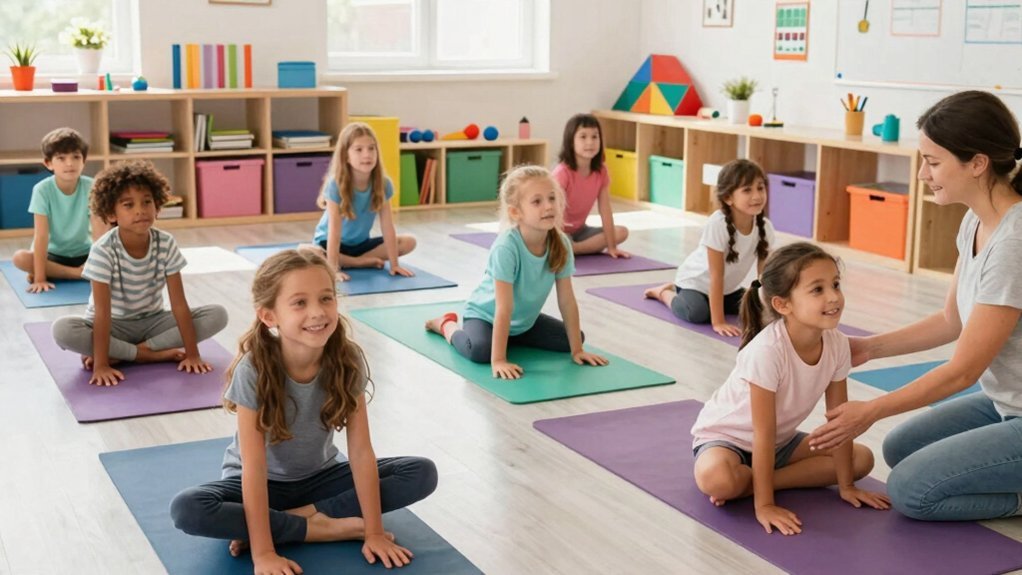
You’ll see that just a few minutes of purposeful yoga each day sharpens focus, coordination, memory, and social skills. Animal‑inspired poses like downward‑dog and butterfly boost bilateral coordination and body awareness. Simple breathing cycles calm the nervous system, lowering stress and improving attention. Fine‑motor activities with props strengthen hand‑eye coordination for writing and cutting. Group games foster cooperation, turn‑taking, and empathy. Adjusting poses for ages 3‑12 keeps practice age‑appropriate, and short, predictable sequences fit seamlessly into daily Montessori routines, giving you even more strategies to explore.
What Is Montessori‑Style Yoga for Kids and Why It Matters

Why does Montessori‑style yoga matter for kids? You’ll see that this approach blends sequential, self‑directed practice with clear, child‑friendly poses that nurture independence and concentration. In a prepared, orderly environment, distractions fade, letting you focus on each movement. You use tangible cues and sensory‑friendly materials, so children grasp each pose concretely. Breathing, stillness, and postural control become practical life skills woven into daily routines, reinforcing self‑care. You observe each child’s rhythm, adjusting pacing so progress feels natural. This individualized pacing lets you tailor activities to developmental needs, fostering self‑regulation. By integrating Montessori‑style principles into yoga, you create a structured yet flexible practice that builds focus, confidence, and a lifelong love of movement. Using Montessori-friendly tools like the Comfy Cubs Kids Step Stool Montessori Tower can further encourage independence in daily activities beyond yoga.
How Simple Animal‑Inspired Yoga Poses Boost Coordination
Ever wondered how a simple animal pose can sharpen a child’s coordination? When you guide them into downward‑dog, cat‑cow, or butterfly, large muscle groups fire, sending rich proprioception signals that heighten body awareness. The quick, cross‑lateral shifts between poses spark neural pathways, boosting bilateral coordination and midline integration. Naming each stretch—like tree or eagle—gives visual and kinesthetic cues that help them recall timing and sequence, sharpening motor planning. Balance‑focused poses demand drishti, training steadier posture and finer coordination. Repeating playful animal series builds neuromuscular memory, so each session accelerates skill development in balance, flexibility, and coordinated movement, turning fun into functional growth. In fact, cognitive and motor skills development is supported by Montessori-inspired activities that promote independent and collaborative learning.
A 5‑Minute Yoga Sequence That Improves Memory in Preschoolers

Curious how a quick, five‑minute yoga routine can sharpen a preschooler’s memory? You’ll guide them through Animal Pose, Tree Pose, and a simple balance pose, each held for a few breaths. Start with a snappy inhale, then a quick exhale—this breath regulation steadies attention before the next move. Name each pose aloud, repeat the action, and give a brief cue like “reach like a giraffe.” Visual cards on the floor keep distractions low, helping encode the sequence. The routine’s clear start, middle, and end create cognitive links, so children remember the order and details later. Consistent practice builds neural pathways, delivering measurable memory enhancement in everyday activities. Integrating hands-on activities like natural wooden peg people play can further support fine motor and cognitive development in young learners.
How Gentle Breathing Techniques Calm the Nervous System
The five‑minute sequence you just practiced not only sharpens memory, it also introduces the power of breath to soothe the nervous system. When you guide kids to inhale slowly through the nose, let the belly rise, then exhale gently, you trigger the parasympathetic response. This lowers heart rate, boosts vagal tone, and steadies emotional regulation during stressful moments. Regular breathing techniques build interoceptive awareness, so children can name their stress signals and shift from restless to centered states, improving attention and easing transitions.
| Breath Focus | Effect on Nervous System |
|---|---|
| Slow inhale | Reduces heart rate |
| Deep diaphragmatic exhale | Activates parasympathetic tone |
| Paired with gentle movement | Shifts energy levels |
| Consistent practice | Enhances emotional regulation |
Yoga Activities That Build Fine‑Motor Skills for Classroom Tasks

You’ll find that simple grip exercises—like pinching a foam ball or practicing the lotus seed pose—sharpen the hand strength you need for writing and cutting.
Pair those moves with hand‑eye coordination games, such as tracing patterns while holding a pose, to boost finger dexterity and spatial awareness.
Together, these activities turn everyday classroom tasks into smooth, confident actions.
Fine‑Motor Grip Exercises
When kids thread a yoga block through a strap or balance on a tabletop pose, they’re actually strengthening the tiny muscles that control their grip, so the next time they pick up a pencil they’ll have better dexterity and steadier hand‑eye coordination for classroom tasks. You can guide them through tiger‑paw stretches, squeezing a strap between thumb and forefinger while inhaling, then releasing on the exhale.
Switching to butterfly pose, they open and close their hands, refining pincer grip and reinforcing fine motor control. Short, focused sessions paired with mindful breathing keep attention sharp and reduce fidgeting. Props like blocks and chairs give proprioceptive feedback, ensuring each transition builds finger strength and precise release, ready for writing, cutting, and other classroom activities.
Incorporating tools with ergonomic grips can further enhance muscle development and hand comfort during these exercises.
Hand‑Eye Coordination Games
Strengthening grip with block‑and‑strap drills naturally leads into games that train the eyes and hands together. You’ll notice that when kids track a partner’s pose while holding a prop, their Hand‑ coordination sharpens and Fine motor skills improve, making writing and cutting smoother. Breath‑synchronized drishti cues keep their gaze steady, extending focus for classroom tasks. Partner mirroring games also teach timing and cooperation, so group projects feel more fluid. Short, repeated animal‑themed poses embed muscle memory in fingers, wrists, and forearms, boosting quick, accurate responses.
- Mirror Pose Challenge – one child copies the other’s pose while maintaining eye contact.
- Block‑Pass Relay – pass a block using only fingertips, syncing breath with movement.
- Target‑Touch Sequence – aim a small prop at colored mats, refining Hand‑eye coordination and Fine motor skills.
Why Calm Transitions Strengthen Emotional Resilience in Children
You’ll notice that a slow, mindful breath instantly steadies your mind, letting you feel calmer before a new activity.
When you pause and move through a structured transition, your focus sharpens and you’re ready to learn.
Because these pauses follow a predictable rhythm, anxiety drops and your emotional resilience grows.
Breathing Calms Mind
Calm breathing acts as a reset button for a child’s nervous system, moving them from a state of high energy or anxiety to a centered, regulated mindset. When you guide kids through slow, rhythmic breathing, you trigger the parasympathetic response that soothes the nervous system. This simple practice sharpens emotional regulation, letting children recognize feelings without being overwhelmed. Regular breath‑based transitions become predictable rituals, reinforcing self‑soothing and building resilience for future challenges.
- Slow breaths – inhale for four counts, exhale for six; steadies heart rate.
- Mindful awareness – notice the rise and fall of the chest; links breath to emotion.
- Consistent routine – schedule brief breathing breaks after demanding tasks to cement coping skills. Training tools with convertibility features can similarly support gradual skill development and confidence building.
Structured Pause Improves Focus
Ever wonder how a brief, intentional pause can turn a restless classroom into a focused learning environment? When you introduce structured pauses—like a 30‑second breath count or a silent stretch—you give kids a moment to reset their nervous system. That calm transition lowers stress hormones, so their brains can process information more clearly. You’ll notice on‑task attention rise as children re‑center, and task completion improves because arousal levels drop to a receptive zone. Consistent use of these pauses builds self‑regulation; kids learn to anticipate and cope with changes, strengthening emotional resilience. Pair a short breathwork cue with a gentle cue, and you’ll see focus sharpen, behavior stabilize, and learning flow more smoothly.
Predictable Flow Reduces Anxiety
Why do predictable, calm transitions in yoga feel like a safety net for children? You notice how a steady, predictable flow eases nervous energy, letting cortisol dip and heart‑rate variability settle. Kids learn to anticipate each breath and pose, turning uncertainty into confidence. That sense of safety fuels anxiety reduction and builds emotional resilience that lasts beyond the mat.
- Set breathing patterns – consistent inhales and exhales create a rhythmic anchor that soothes nervous systems.
- Familiar pose progressions – repeating sequences let children predict what’s next, reducing surprise‑driven stress.
- Clear, repeated cues – simple verbal or visual prompts reinforce self‑monitoring, extending self‑control into daily life.
Group Yoga Games That Encourage Social Skills and Empathy
How can a simple game turn a yoga class into a playground for empathy and teamwork? You’ll notice that group games like Follow the Leader or Simon Says instantly spark cooperation and turn‑taking, sharpening social skills while children laugh and stretch together. Animal‑themed poses turn the mat into a forest where peers observe and support each other, building a sense of belonging. Breath pauses during partner sequences calm emotions, letting kids respond empathetically. When a child leads, confidence blooms, and classmates gain respect, reinforcing responsibility and community.
| Game | Core Skill | Emotional Impact |
|---|---|---|
| Follow the Leader | Coordination | Trust |
| Simon Says | Listening | Joy |
| Animal Pose Relay | Observation | Connection |
| Partner Breathing | Empathy | Calm |
Adapting Yoga for Different Age Groups in a Montessori Setting
The lively group games that spark teamwork also show how yoga can be shaped for each Montessori age bracket. You’ll notice that kids 3‑7 explore animal poses and storytelling, turning movement into play that builds motor skills and imagination. For ages 8‑12, you introduce structured sequences that teach emotional regulation and stress management. You keep sessions short, use visual cues, and create sensory‑friendly spaces, letting every child engage at their own pace.
- Age‑appropriate themes – animal‑focused for younger, nature‑meditation for older.
- Adaptive tools – blocks, straps, chairs for diverse abilities.
- Flexible grouping – one‑on‑one or small circles to honor Montessori individualized learning.
Incorporating fine motor skill development tools like child-safe tongs during sessions can further enhance hand-eye coordination alongside yoga movements.
Essential Props That Make Kids’ Yoga Easy and Engaging
You’ll notice that bright, soft props instantly make the space feel welcoming and safe for kids. Simple tools like blocks, straps, and colorful mats keep them engaged while supporting proper alignment. By choosing these easy‑to‑use items, you create an environment where every child can participate confidently.
Bright Props for Comfort
We love how bright, soft props turn a chaotic room into a calm, inviting yoga space for kids. When you choose vivid blankets, cheery bolsters, and colorful blocks, you create a sensory‑friendly zone that instantly reduces distractions. The hues catch children’s eyes, while the plush textures invite them to settle into each pose. By pairing these props with illustrated pose cards, you give kids a visual cue that guides their movements without constant verbal prompts. This combination supports focused practice, encourages independence, and makes Yoga sessions feel like play.
- Rainbow blankets – soft, wave‑like folds that cushion the floor.
- Sunshine bolsters – bright cylinders for supported stretches.
- Playful blocks – child‑sized, vivid cubes for alignment and balance.
Simple Tools for Engagement
Bright blankets and cheery bolsters already set a calm, inviting scene, and now simple tools take that foundation further by turning curiosity into confident movement. You’ll find blocks, straps, and chairs help kids of all abilities achieve proper alignment, turning yoga benefits into tangible successes. Visual aids and bite‑size instructions cut cognitive load, so children can follow sequencing without getting lost, boosting engagement during each transition.
Soft lighting and a distraction‑free space create a sensory‑friendly zone that sharpens focus and eases overstimulation. Short sessions and options for one‑on-one or small-group guidance let you tailor the experience to each child’s attention span. By pairing adaptive equipment with clear, concrete cues, you empower young learners to explore poses safely and confidently. Using tools designed with child-sized dimensions encourages safe handling and builds fine motor skills, enhancing the overall learning experience.
Adding Short Yoga Moments to Daily Montessori Routines
Ever wondered how a three‑minute yoga break can transform a Montessori classroom? You can weave quick poses into the daily rhythm, giving children a boost in Balance and Coordination while calming their minds with Deep breathing. A short, animal‑inspired sequence fits naturally between work cycles, keeping energy flowing without derailing focus.
- Tree and Eagle poses – hold each for 30 seconds to develop steadiness and core strength.
- Deep breathing transitions – inhale for four counts, exhale for six, easing nervous tension before the next activity.
- Rest poses – child’s pose or seated forward fold for a minute, resetting emotional regulation and sharpening attention.
Visual cues and simple instructions make each pause accessible, helping every learner stay engaged and ready to learn.
Frequently Asked Questions
Can Yoga Improve Reading Comprehension in Early Elementary Students?
Yes, yoga can boost reading comprehension for early elementary students. By practicing mindful breathing and gentle stretches, you’ll improve focus, reduce anxiety, and enhance memory, all of which help them grasp and retain text more effectively.
Do Children With Sensory Processing Challenges Benefit From Yoga in the Classroom?
You’ll see that children with sensory processing challenges do benefit from classroom yoga; it calms their nervous system, improves focus, and offers structured movement that helps them regulate sensory input and engage learning.
How Often Should Teachers Repeat Yoga Sessions for Lasting Academic Impact?
You should schedule yoga sessions at least three times a week, keeping each class 15‑20 minutes long, so students build consistent focus, reduce stress, and see lasting academic gains.
What Safety Precautions Are Needed for Toddlers Practicing Yoga Poses?
You should clear the space, use non‑slip mats, keep poses simple, supervise constantly, avoid props that could tip, ensure the toddler’s clothing isn’t restrictive, and stop if they show discomfort or fatigue.
Can Yoga Help Reduce Test Anxiety During Standardized Assessments?
Yes, yoga can calm your nerves and lower test anxiety. By focusing on breath, gentle stretches, and mindfulness, you’ll quiet racing thoughts, improve concentration, and approach standardized assessments more confidently.