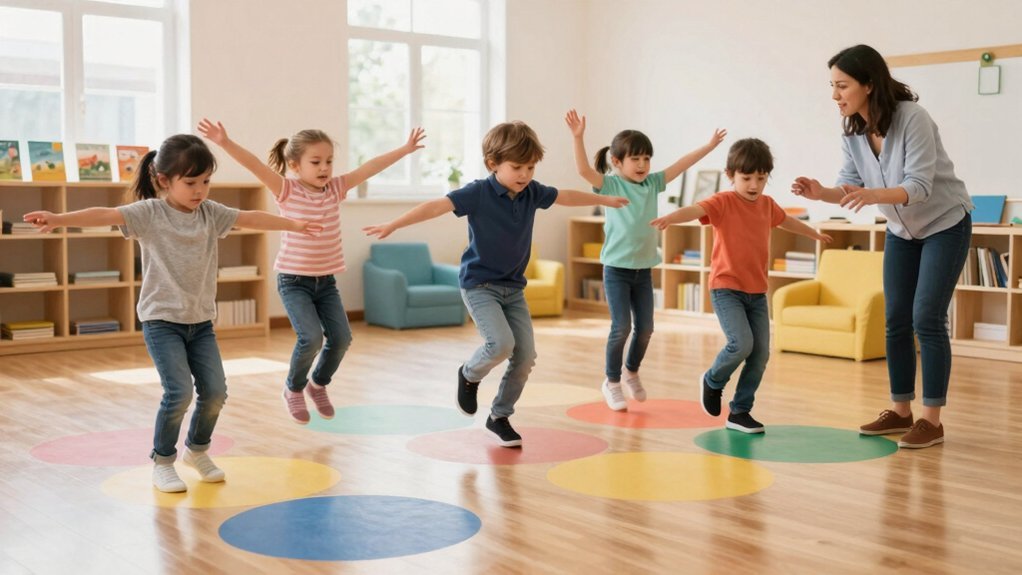
Set up a kinesthetic zone with soft rugs, low shelves, and a mini‑library so kids can move freely while picking books. Use color‑coded prompts—green for pre‑reading, blue for purpose, yellow for strategies, orange for fixes, pink for reflection—to guide actions. Encourage standing, stretching, or gesturing as they read, and add sight‑word scavenger hunts and sorting stations to turn movement into low‑stakes practice. Offer adaptive tools and safe, low‑step storage for all learners, and keep the space organized with labeled containers. Keep exploring for deeper strategies.
Create a Kinesthetic Reading Zone at Home

How can you turn a corner of your living room into a kinetic learning hub? Start by defining a kinesthetic zone with soft rugs and low shelves that mark safe boundaries. Place a mini‑library and reading cards around the area for reading around the room, letting you pick a book and move to a new spot each time. Use color‑coded highlight guides: green pre‑reading prompts, blue purpose cues, yellow during‑reading strategies, orange fixes, and pink post‑reading reflection. Encourage purposeful movement—stand to sit, stretch, or gesture—while you explore the text. This classroom setup supports reading readiness by integrating movement with comprehension, keeping anxiety low and engagement high. Incorporating Montessori-friendly step stools in this space can also promote independence and safe movement for young learners.
Core Kinesthetic Activities for a Movement‑Rich Reading Zone
After turning a corner of your living room into a kinesthetic reading zone, you can deepen engagement with core activities that blend movement and literacy. Start with a sight word scavenger hunt: hide words on objects, let kids tally finds, and watch classroom movement turn into low‑stakes practice.
Set up sorting stations in each corner, using labeled containers so students physically move items to correct bins, reinforcing reading readiness without cutting or gluing.
Add reader’s theater, assigning roles and encouraging gestures that match dialogue, which builds oral fluency and collaborative focus.
Finally, embed phoneme motions—pair each phoneme in a target word with a simple gesture, prompting kids to act out sounds while they read.
These kinesthetic activities keep the reading zone dynamic and purposeful. Selecting storage with low step-in access enhances independent cleanup and keeps the reading zone organized.
Tailoring Movement Strategies for Every Learner in Your Reading Zone

Which movement will best support each child’s reading growth? You match inclusive movement to literacy goals by offering standing, seated, or wall‑supported options that respect balance and strength differences. For Deaf or hard‑of‑hearing learners, provide adaptive tools like Thera Putty, stencils, or stretch bands so they stay engaged during phoneme‑gesture drills and letter‑name actions. Pair high‑energy alerting activities—jumping or marching—with grounding animal walks or crawling to align energy levels with learning objectives. Use differentiated instruction to observe stamina, engagement, and balance, then adjust the classroom strategy. By blending engaging activities with targeted movement, you create a flexible, inclusive environment that drives reading readiness for every learner. For safety-conscious environments, it’s important to consider tools certified for NSF food safety when selecting any instructional materials that interact with food or sensory experiences.
Frequently Asked Questions
How to Develop Reading Readiness?
You develop reading readiness by blending brief, purposeful movement breaks with phonics drills, using gestures that match sounds, and encouraging active, hands‑on activities that keep attention focused while you practice literacy skills.
What Is the 5 4 3 2 1 Reading Strategy?
You apply the 5‑4‑3‑2‑1 strategy by guiding students through five phases—modeling, guided, collaborative, independent, then reflection—each with decreasing prompts, increasing autonomy, and purposeful movement cues.
In What Ways Can Movement Be Used to Reinforce Literacy Skills?
You can jump, clap, or hop while saying phonemes, act out story scenes, use colored‑coded steps for pre‑ and post‑reading, and sync music with gestures to cement sounds, meanings, and fluency.
What Are the 4 P’s of Pre Reading?
You’ll use the four P’s: Predict, Preview, Prioritize, and Practice. You activate background knowledge, skim headings, choose key ideas, and rehearse concepts through brief, purposeful movements before reading.