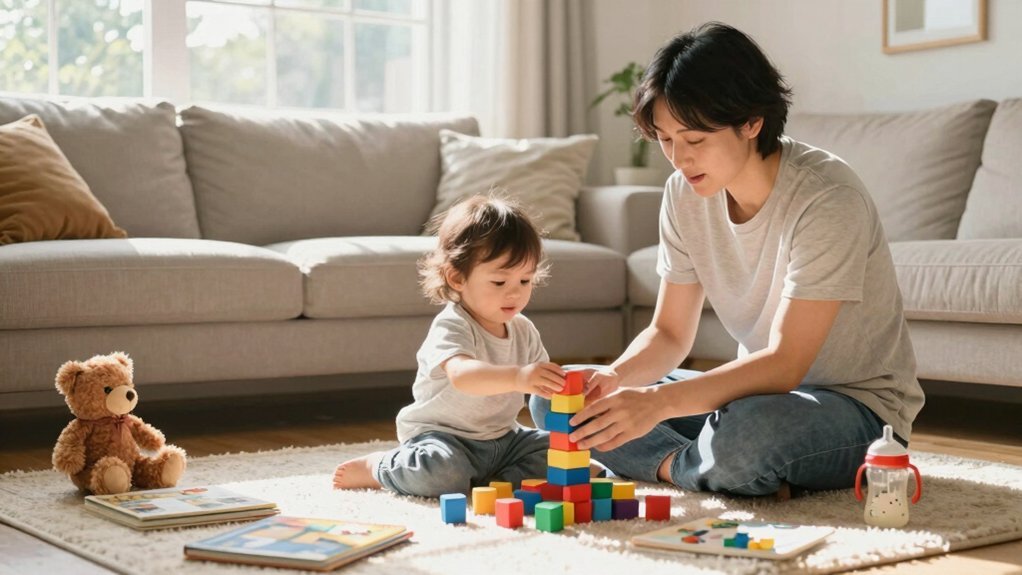
Create a visual morning checklist with bite‑size steps—backpack, dressing, teeth brushing—so your toddler can tick each off and feel proud. Turn hygiene into a game using songs, timers, and dancing while you demonstrate brushing, washing, and combing, then step back for them to try. Offer simple chores like zipping bags, buttoning coats, and folding napkins to boost fine‑motor skills, using child‑safe tools and praise. Keep tasks short, use visual cues, and let independence grow; the next sections reveal deeper strategies.
Build a Simple Morning Routine for Toddlers
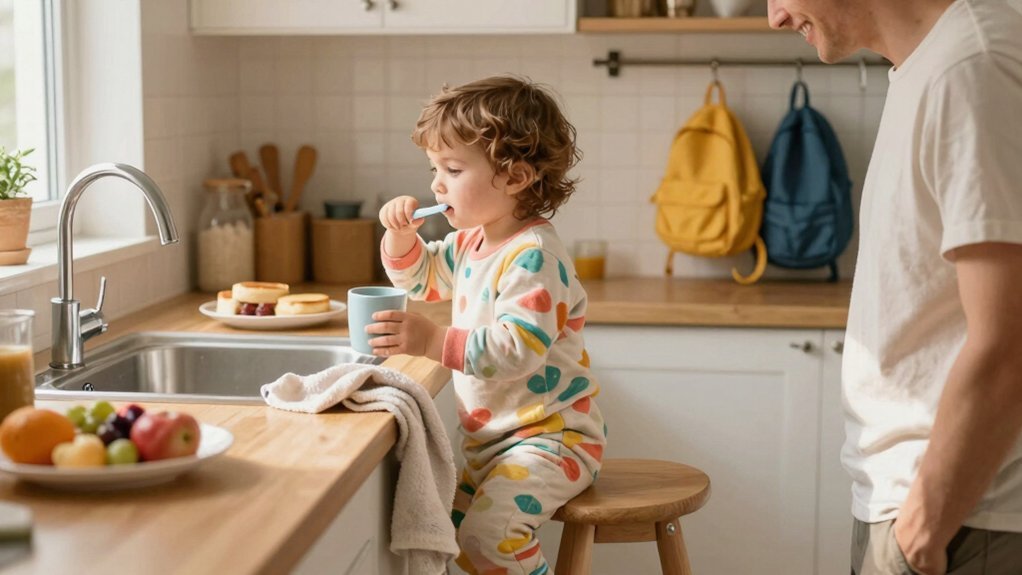
How can you turn chaotic mornings into a smooth, confidence‑building routine for your toddler? Start with a clear morning routine: a simple checklist of tasks—backpack, dressing, teeth brushing—creates a daily rhythm that toddlers can follow. Lay out a chore chart where each item is a bite‑size step, and let your child tick it off. Encourage independence by letting them choose socks or zip a jacket, then guide them through personal care like washing their face and combing hair. After breakfast, assign a small after, such as putting shoes away, to reinforce responsibility. Offer adult participation sparingly: demonstrate how to brush teeth, then step back while they try. Consistent, gentle reminders turn chores into habits, building confidence and self‑reliance. Using tools like a Montessori step stool with safety rail can also empower toddlers to participate safely and confidently in their routines.
Playful Hygiene Habits for Toddlers
Ever wondered how a simple song can turn teeth brushing into a fun game? You can turn face washing and hair combing into a lively routine by singing a catchy tune, setting a timer, or dancing while you demonstrate each step.
Turn hygiene into a game with songs, timers, and dancing to make brushing, washing, and combing fun.
Show toddlers how to squeeze toothpaste, scrub gently, rinse, and then cheer them on with positive reinforcement.
Use visual checklists and memory cues—pictures of a toothbrush, soap, and comb—to guide them through personal care.
Let them practice independently after the demo, gradually increasing independence as confidence builds.
Consistent, playful reminders embed these habits into daily routines, turning hygiene into a joyful responsibility rather than a chore.
Introducing age-appropriate tools like child-safe wooden hammers can also foster coordination and confidence in toddlers through safe, playful learning activities.
Fine‑Motor Chores to Teach Life Skills
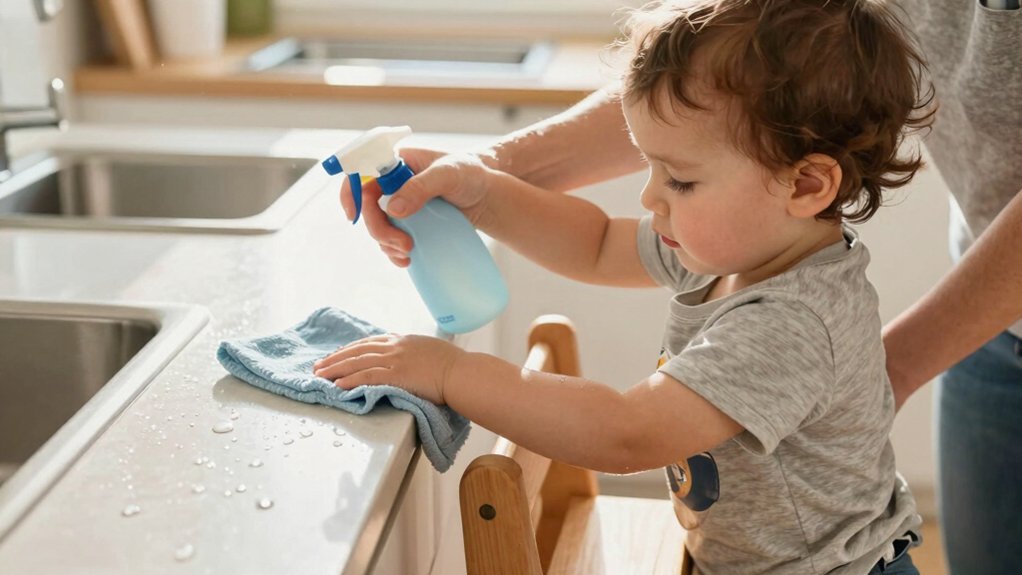
Fine‑motor chores give toddlers a tangible way to build dexterity while contributing to the household. You’ll notice how zipping bags, buttoning coats, and folding napkins turn everyday chores into tiny practice labs for fine motor skills. Offer a tray of tweezers and beads for sorting by color, then let them transfer items between jars using a spoon or tongs. A Montessori‑inspired setup—two bowls for washing, a cloth for wiping, and clothespins for hanging—lets them lead the cleaning routine while sharpening hand‑eye coordination. Keep tasks short, praise effort, and watch their confidence grow as they master these life‑skill chores. Using child-sized tools with roughened interior surfaces can enhance sensory exploration and fine motor development during these activities.
Montessori‑Style Life‑Skill Activities for Toddlers
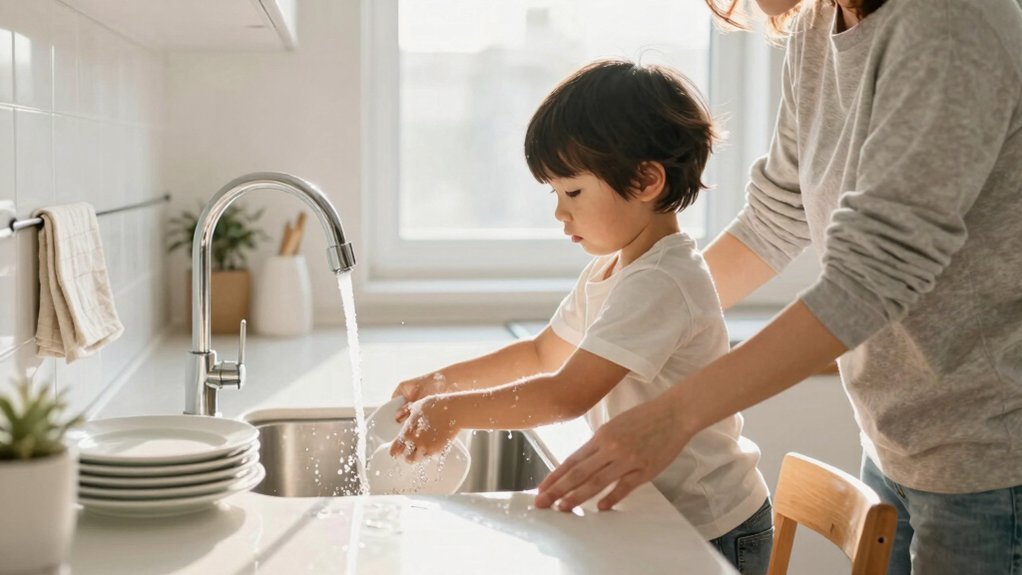
Curious about turning everyday chores into mini‑workshops? You can bring Montessori principles into your home by letting toddlers tackle hands‑on learning cleaning tasks that build life skills and independence. Set up two dish buckets—one with soapy water, one plain—for washing and rinsing dishes, then have them hang the towels with clothespins. Give them a pretend vacuum or a wet rag for dusting surfaces, and simple box‑flick or sorting games to sharpen fine motor skills. Demonstrate each step, then step back so the child‑led activity feels purposeful and safe. Folding, unfolding, and organizing toys reinforce order and concentration, key goals of early childhood education. These practical activities turn routine chores into confidence‑boosting lessons. Using child-size brooms and dustpans designed for toddlers encourages their participation in real cleaning tasks while ensuring safety and ease of use.
Frequently Asked Questions
What Is the 777 Rule for Toddlers?
The 777 rule means you give a toddler seven minutes of focused activity, then seven minutes of calm rest, followed by seven minutes of movement or a new task, keeping sessions short, varied, and engaging.
What Are the 7 Essential Life Skills for Kids?
You focus on language, motor (gross and fine), social interaction, early learning, imagination, self‑regulation, and preschool independence tasks like dressing, personal care, and organizing belongings.
What Is the 10 10 10 Rule for Toddlers?
You follow the 10‑10‑10 rule by giving a toddler ten minutes of focused activity, ten minutes of rest or transition, and ten minutes of independent practice, then repeat the cycle as needed.
What Is the 7 7 7 Rule for Raising Children?
You follow the 7‑7‑7 rule by practicing a skill for seven minutes each day, seven days a week, for seven weeks, letting the repetition build lasting habits in your toddler.

Leave a Reply