
You’ll see that sensory materials fire up all five senses, so your toddler’s brain builds stronger neural pathways for language, fine‑motor skills, and problem‑solving. Squeezing, pouring, and scooping sharpen hand muscles and hand‑eye coordination, while textures and sounds spark curiosity and help them label the world. The calming, rhythmic input also supports self‑regulation. Keep exploring, and you’ll discover deeper benefits and practical ideas.
What Is Sensory Play and Why It Matters for Toddlers
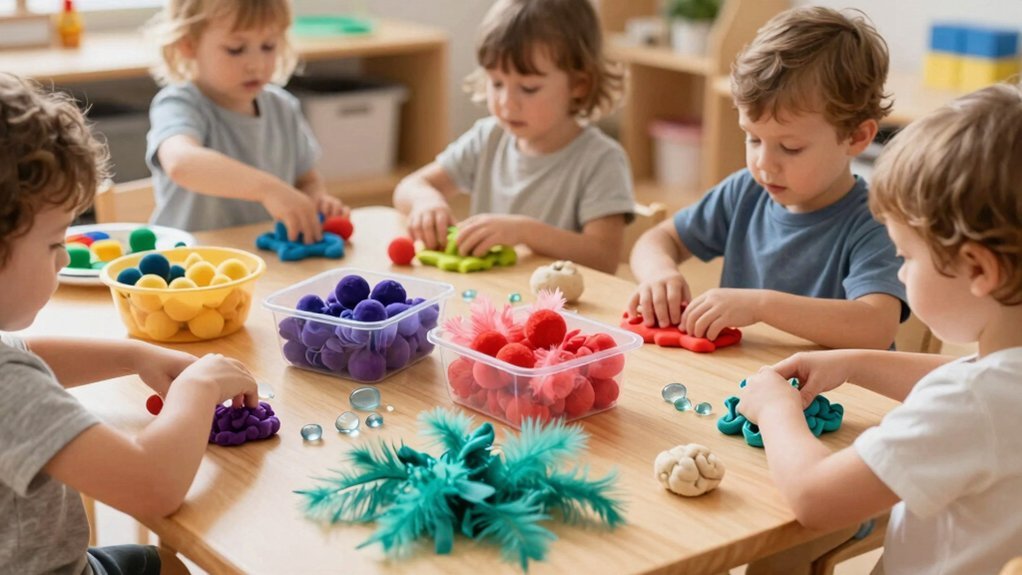
Why does sensory play matter for toddlers? You’ll see that sensory play engages touch, sight, hearing, smell, and sometimes taste, letting toddlers explore and interpret their world. When they squeeze a squishy ball or pour water, they’re strengthening motor skills and building neural pathways that boost development. You’ll notice language blossoms as you describe textures and sounds, and social skills grow when kids share materials and negotiate play. The activities adapt to each child’s stage, so even early‑stage toddlers can benefit without frustration. By providing varied tactile tools and encouraging movement, you lay a foundation for problem‑solving, memory, and emotional regulation. In short, sensory play is a powerful, all‑around catalyst for toddlers’ growth. Choosing Montessori-friendly tools such as a step stool with safety rail can further support independence and confident exploration during sensory activities.
How Sensory Play Enhances Fine Motor and Coordination Skills
Sensory play doesn’t just spark curiosity—it also builds the tiny muscles and coordination toddlers need for everyday tasks. When you let your child pinch, scoop, twist, squeeze, or pour beans, rice, or pasta, you’re strengthening fine motor muscles essential for writing and cutting. Repeating motions like rolling dough or squeezing textures hones hand control, making buttoning and utensil use smoother.
These activities link tactile feedback with visual and auditory cues, sharpening hand‑eye coordination as your child tracks small objects. Outdoor messes that involve lifting and shaping broaden motor planning, supporting the precise dexterity you see in later play. By weaving sensory play into daily routines, you boost fine motor and overall motor skills, setting a solid foundation for future independence. Incorporating educational tools such as the READY 2 LEARN Base 10 Block Stamps further develops fine motor skills while introducing foundational math concepts.
Why Tactile Play Makes Little Hands Stronger
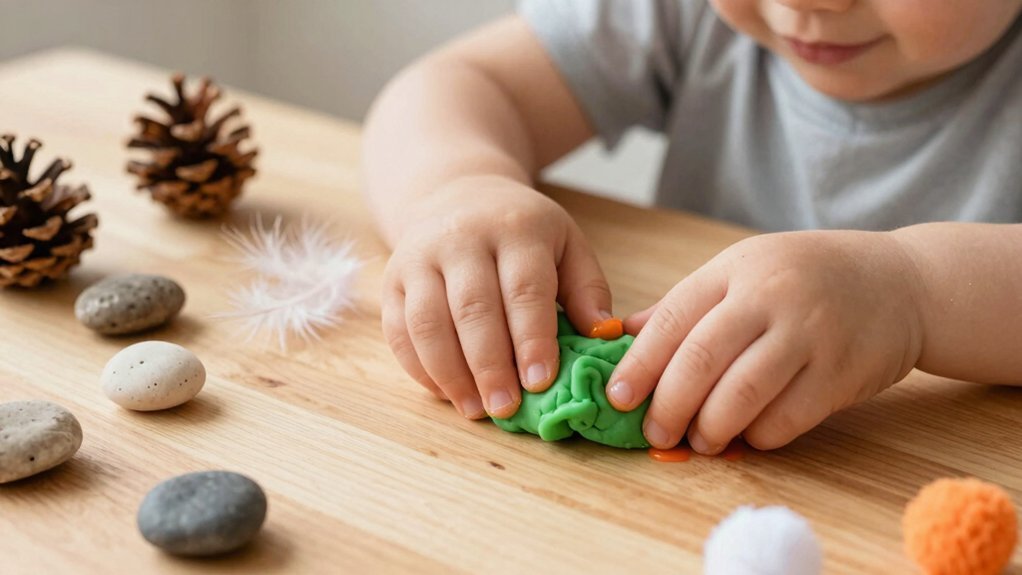
You’ll notice that pinching, squeezing, and stirring build fine‑ motor strength, while manipulating different textures sharpens your hand‑eye coordination. Those tactile actions also help you tune into sensory feedback, boosting focus and persistence. As you explore objects of varied weight and size, you naturally start solving simple problems on your own. Using eco-friendly materials in sensory play tools enhances both learning and environmental responsibility.
Builds Fine‑Motor Strength
A handful of everyday tactile activities—like pinching a grape, squeezing a sponge, or twisting a bottle cap—quickly builds the hand muscles your child needs for writing, cutting, and buttoning. When you set up sensory play with rice scoops, playdough rolls, or water‑filled containers, you’re giving them repeated fine motor challenges that target grip precision and finger isolation. Each pinch, squeeze, and twist forces the hand muscles to work harder, boosting fine motor strength and refining the neural pathways that control smooth movements. Outdoor textures such as sand, beans, or mud add variety, encouraging balanced motor planning and steadier hand control. By integrating these simple, repetitive actions into daily routines, you help your toddler develop stronger, more coordinated hands ready for early school tasks. Introducing age-appropriate tools like a child-safe hammer can further enhance fine motor skills by combining tactile play with controlled hand movements.
Enhances Hand‑Eye Coordination
When a toddler repeatedly squeezes a sponge, pinsches a grape, or stirs water with a spoon, the brain learns to sync visual cues with hand movements, sharpening hand‑eye coordination. Sensory play gives them tiny objects and tools that demand precise grip, so fine motor pathways fire constantly. Each pinch, pour, or roll of a bead forces the visual system to track the object while the hand adjusts pressure, tightening the feedback loop.
The proprioceptive buzz from tactile materials builds body awareness, letting the child anticipate where a spoon will land before it touches the bowl. Over time, these repeated actions cement neural circuits that blend sight and motion, making drawing, cutting, and buttoning feel natural and effortless. Introducing sorting trays with multiple compartments enhances this process by encouraging organized tactile exploration.
Encourages Early Problem‑Solving
How does a handful of squishy clay turn a toddler into a budding problem‑solver? When you hand them sensory materials like clay, sand, or water beads, they start testing hypotheses—what happens if you squeeze dry versus wet? Each pinch, squeeze, and pour is tactile play that forces them to predict outcomes, notice cause‑and‑effect, and adjust strategies. Repeating these actions builds procedural memory, so later tasks feel familiar and easier to tackle. You’ll see them persist longer, focusing on the challenge rather than giving up. Their fine‑motor skills sharpen, and they begin to approach new puzzles with confidence, laying a solid foundation for early problem‑solving and independent exploration.
How Sensory Play Fosters Curiosity, Creativity, and Problem‑Solving
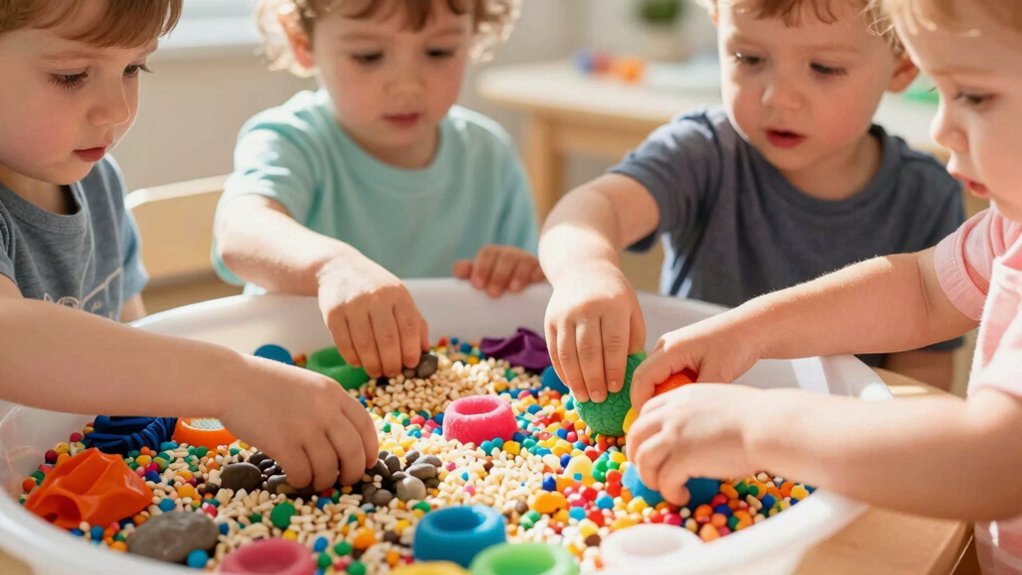
Open‑ended exploration lets you transform simple bins or playdough into endless stories, fueling creativity. As you pour, scoop, and mix, you’re solving problems on the spot, learning cause‑and‑effect through hands‑on play. Using age-appropriate sensory toys like large beads for toddlers ensures safe and beneficial fine motor skill development.
Sparks Sensoryine
Sensory play ignites curiosity, handing toddlers textured bins, squishy dough, and crunchy leaves that invite endless questions and predictions. You’ll notice how sensory play fuels curiosity; each new texture prompts a guess, a test, a discovery.
As you guide the child through exploration, they’ll transform a single material into countless scenarios—building a bridge, crafting a creature, or inventing a story.
Problem‑solving emerges when they experiment: which surface slides, which shape holds, how much to pour. You’ll hear them label sensations—“slimy,” “gritty”—and narrate actions, expanding vocabulary.
These tactile challenges sharpen attention, memory, and cognitive flexibility, linking physical experience to mental strategy. The result is a lively, self‑directed learning loop that keeps them engaged and growing. Incorporating Montessori life cycle materials into sensory exploration deepens understanding by connecting touch with natural developmental concepts.
Open‑Ended Exploration
Ever wonder why a simple bin of sand and shells can spark endless questions? When you set up sensory play with open-ended exploration, toddlers dive in, touching, seeing, hearing, and even smelling the materials. They ask “What’s this?” and predict how the sand will shift, then test their ideas without a right answer in sight. This multitouch experience builds richer neural pathways, making their thinking flexible. As they describe “soft,” “sticky,” or “cold,” they add verbal labels that sharpen concepts and ignite creativity. Child‑directed materials like clay, water, or loose parts let them chase hypotheses, adjust actions, and transfer curiosity‑driven strategies to new tasks. The result is deeper engagement, sustained attention, and a blossoming love for discovery.
Hands‑On Problem Solving
When toddlers scoop, pour, or pinch materials, they’re not just playing—they’re training the fine‑motor muscles that later support writing and self‑care. Sensory play turns a simple bucket of beans into a laboratory for hands‑on problem solving. You’ll notice them predicting how a stream will flow, adjusting pressure, and watching the result. Each trial builds fine motor skills while forging neural pathways that boost cognitive development.
The texture of sand, the sound of clinking beads, the temperature of water create a multisensory feedback loop that sharpens memory and encourages hypothesis testing. As they describe what they feel and compare outcomes, they refine language, enhance flexibility, and develop persistence—key ingredients for creative problem solving.
How Sensory Play Helps Children Calm Down and Self‑Sooth
Ever notice how a simple squeeze ball or a gentle stream of water can instantly settle a restless toddler? You’ll see sensory play trigger proprioceptive input that lowers arousal, letting your child self‑soothe and regain focus. The calming rhythm of pouring, rolling, or squeezing creates a predictable pattern that supports emotional regulation, so toddlers can transition back to a ready‑to‑learn state. Soft lighting, quiet corners, and plush textures amplify the grounding effect, turning a frantic moment into a teachable pause.
- Offer heavy toys for deep pressure.
- Use water tables or gentle streams.
- Set up dim, quiet spaces with soft fabrics.
- Integrate rhythmic motions like rolling beads.
Inclusive Sensory Play Strategies for Children With Special Needs
How can you make sensory play truly inclusive for children with special needs? Start by assessing each child’s sensory processing profile and then tailor the environment for quiet lighting, predictable routines, and familiar textures. Use adaptable materials—soft beans, smooth ribbons, or weighted blankets—that you can swap out to match sensitivities. Incorporate a sensory diet: short, structured bursts of play that regulate emotions and sustain engagement. Keep safety front‑and‑center; supervise small objects and avoid overwhelming volumes. Invite occupational therapists to co‑design activities, ensuring professional guidance when needed. Emphasize inclusivity by offering choices, allowing children to control intensity, and celebrating every successful interaction. This adaptability turns sensory play into a supportive, empowering experience for all learners.
Simple At‑Home Sensory Projects for Parents and Caregivers
A sensory bin filled with rice, pasta, or beans turns a kitchen countertop into a discovery zone, letting you hide small toys for kids to uncover. You’ll see how simple at‑home activities spark curiosity and boost fine motor development while reinforcing toddler learning.
- Dry‑grain bin – mix rice, pasta, or beans; add scoops and hidden objects for tactile exploration.
- Outdoor tummy‑time – let your child crawl on grass, sand, or leaves to feel varied textures and strengthen coordination.
- DIY sound shakers – fill sealed containers with rice or pasta, shake to hear volume changes, and sing together for social interaction.
- Sensory scavenger hunt – guide your toddler to locate items by sound, texture, or smell, encouraging language use and focused attention.
These projects keep sensory play fresh, affordable, and developmentally rich.
How to Spot Progress: Signs Sensory Play Is Transforming Learning
When you notice your toddler’s eyes light up as they explore a new texture, you’re seeing the first sign that sensory play is reshaping their learning. You’ll spot curiosity spikes when they linger with a toy, turning it over and testing its feel—this sustained attention shows exploration expanding. Listen for richer vocalizations; calling a surface “slimy” or “rough” signals language development tied to multisensory input. Observe how they share materials in group settings; smoother turn‑taking and cooperative problem‑solving reveal boosted social skills. Finally, watch for repeated use of objects in new contexts—whether they apply a stacking technique to blocks after a sand‑play session—demonstrating transfer of learning across activities. These cues together confirm sensory play’s transformative impact.
Frequently Asked Questions
What Do Toddlers Learn From Sensory Activities?
You learn fine‑motor control, sensory integration, new vocabulary, problem‑solving strategies, social cooperation, and gross‑motor coordination from sensory activities, all of which build the foundation for later academic and life skills.
How Does Sensory Development Impact Learning in Children?
You’ll find sensory development sharpens memory, boosts attention, and builds neural pathways, so you learn faster, stay focused longer, and connect ideas more easily across subjects.
What Are the Benefits of Children Having Sensory Experience?
You’ll boost neural connections, sharpen language, improve fine‑motor control, and foster creativity, while also enhancing emotional regulation and social interaction through hands‑on, multisensory exploration.
What Are the Benefits of Increased Sensory Activities?
You’ll notice stronger neural links, better memory, refined motor skills, richer vocabulary, smoother social interactions, and improved self‑regulation—all from simply adding more sensory activities to daily play.