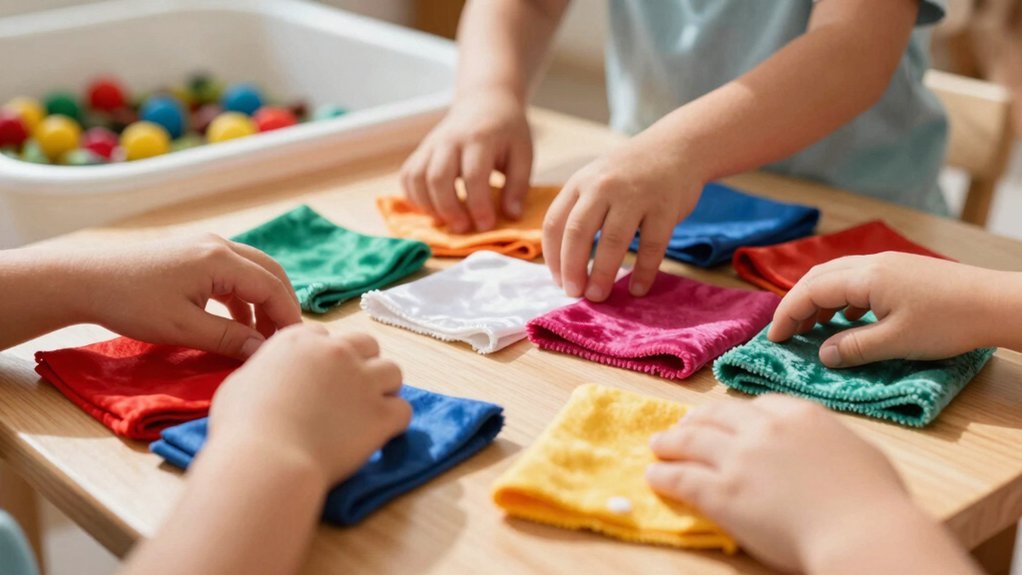
You boost sensory learning by handling fabric cards that fire tactile receptors, sharpen visual discrimination, and engage proprioception. Each texture—smooth silk, rough burlap, soft cotton—creates a distinct mental anchor, so you notice subtle temperature and softness shifts. Pairing fabrics with colors, patterns, and labels reinforces memory and speeds processing, while self‑checking and instant feedback build confidence. The more you play, the stronger your fine‑motor skills and attention become, and the next section shows how to track that growth.
Fabric Matching Games: How They Activate the Tactile System?

How do fabric matching games fire up your tactile system? You grasp smooth silk, rough burlap, soft cotton, and each fabric texture triggers distinct skin receptors. By handling and comparing fabrics, you sharpen tactile discrimination and texture differentiation, training your nervous system to notice subtle temperature and softness shifts. The repeated hand movements generate proprioceptive input, boosting body awareness and spatial perception. As you pair tactile input with labels—colors, patterns, material names—somatosensory processing intensifies, fostering sensory organization that steadies emotions. This active engagement links sensation to description, reinforcing neural pathways that underlie sensory learning. The result is a more responsive tactile system that efficiently parses varied textures and supports precise perceptual judgment. Exploring different napkin folding materials can further enhance texture recognition through varied tactile experiences.
Fabric Matching Games Boost Memory & Concentration
Ever notice how a simple fabric‑matching game can sharpen your focus? You’ll find that fabric matching strengthens memory and concentration by turning tactile cues and visual cues into vivid mental anchors. Each repeated practice round forces you to recall locations and pairings, which fortifies neural connections and boosts recall speed. The instant feedback after a successful match reinforces memory strategies, keeping you engaged and ready for academic challenges. This type of sensory engagement is similar to how using a Montessori step stool supports hands-on learning and independence.
| Feature | Benefit | Example |
|---|---|---|
| Tactile cues | Enhance encoding | Different textures |
| Visual cues | Aid discrimination | Color and pattern |
| Repeated practice | Build neural connections | Multiple rounds |
| Immediate feedback | Strengthen recall | Correct/incorrect signals |
Fabric Matching Games Enhance Visual Discrimination

After sharpening memory and concentration, the next benefit of fabric‑matching games is their boost to visual discrimination. You’ll notice subtle differences in texture, color, and pattern as you compare multiple fabric pieces, and each matching attempt hones your perception. Repeatedly pairing identical fabrics and rejecting mismatches trains your eyes to spot fine details, while the tactile feel reinforces the visual cues. This cross‑modal practice creates rapid visual memory encoding, so you recall which hues and textures you’ve already matched. Immediate feedback after each matching round sharpens your judgment, reducing ambiguity and strengthening your ability to discriminate between similar fabrics. The result is a more precise, attentive visual discrimination skill set. Incorporating tools like fine motor tool sets can further enhance sensory and tactile engagement during matching activities.
How to Teach Texture Vocabulary With Fabric Matching Games?
What if you could turn a simple fabric‑matching game into a powerful vocabulary lesson? You start by laying out four distinct fabrics—silky, rough burlap, velvety, soft cotton—and give each an explicit label. As students pair textures, you repeat the texture names, reinforcing memory and boosting recall. Add multisensory prompts: a quick description, a color cue, or a warmth hint, so learners link tactile discrimination to richer semantics. Use scaffolding, beginning with two‑texture choices, then expand to three, sharpening tactile discrimination and expanding texture vocabulary. Finally, conduct brief assessment check‑ins where each child labels a card and explains differences, providing data to tailor instruction and track progress. Incorporating tools with ergonomic handle design can help children comfortably engage with sensory learning activities, making tactile exploration easier and more enjoyable.
Fabric Matching Games Develop Fine‑Motor Control

A simple fabric‑matching game does more than teach texture vocabularies—it builds fine‑motor control. When you lift, turn, and place fabric cards, you strengthen small hand muscles and develop a reliable pincer grip. Each deliberate motion sharpens hand‑eye coordination and finger dexterity, while varied textures—silk, cotton, velvet—provide graded tactile input that hones texture discrimination. Sorting by color or feel forces midline crossing and demands precise motor planning, turning simple actions into practiced skills.
Repeating the matching cycle embeds muscle memory in your fingers, so later tasks like buttoning or writing feel smoother and faster. Over time, these repeated, purposeful movements transform raw tactile experience into refined fine motor ability. Using fabrics like polyester blends in dress-up clothes can also reinforce the sensory experiences important for developing these skills in everyday play.
Fabric Matching Games Promote Social Interaction & Turn‑Taking
Fine‑motor practice naturally leads into the social side of play: when kids lift and match fabric cards together, they instantly start sharing, waiting, and negotiating. You’ll notice them describing textures, naming colors, and offering suggestions, which builds vocabulary and communication. The group play environment creates peer modeling moments, reinforcing cooperation and emotional regulation. Structured prompts help children practice turn‑taking and recognize social norms, while caregivers model inclusive interaction.
- Turn‑taking drills – each child waits for the next fabric match.
- Descriptive vocabulary – kids label textures and colors aloud.
- Cooperative decision‑making – peers negotiate which piece fits best.
- Peer modeling – observing a classmate’s communication guides behavior.
Fabric Matching Games in Montessori Daily Routines
Ever wonder how a simple fabric‑matching activity can become a cornerstone of your Montessori classroom’s daily rhythm? You place a tray of silk, cotton, velvet, and fleece in the prepared environment, then invite children to pair pieces by color, pattern, or texture. This routine sharpens visual discrimination while reinforcing early math readiness as they sort and count. The tactile variety fuels sensory learning, and the self‑correcting nature of matching games builds concentration and independence during morning work, transitions, or quiet periods. As kids name textures and compare differences, language development blossoms. You can scale the challenge by adding more items or complex categories, keeping the activity fresh and aligned with daily Montessori cycles. Incorporating tools designed for fine motor skills development, such as child-safe hammers and nails, can further enhance the hands-on learning experience.
Measuring Sensory Progress in Fabric Matching Game Sessions
How can you tell whether a child’s tactile discrimination is truly improving through fabric‑matching sessions? You observe measurable shifts in texture identification and visual‑tactile association, then log them for clear sensory progress tracking. A concise visual chart shows mastered swatches, while timing each round reveals processing speed and attention span changes. Over weeks, the child’s willingness to explore varied fabrics signals growing sensory tolerance.
- Record correct matches per session – gauges memory retention.
- Note time taken for each match – measures processing speed.
- Track texture variety explored – reflects sensory tolerance.
- Update a visual progress chart – visualizes tactile discrimination growth.
Incorporating self-checking features similar to those in Montessori materials can enhance independent learning during fabric matching.
Frequently Asked Questions
What Are the Benefits of Playing Matching Games?
You sharpen memory, boost visual discrimination, expand vocabulary, improve fine‑motor coordination, and develop social‑cognitive skills like turn‑taking, attention, and collaborative problem‑solving through active, repetitive matching play.
What Are the Learning Outcomes of Matching Games?
You’ll improve memory, visual discrimination, language, fine‑motor skills, and social cooperation; each match reinforces recall, pattern spotting, vocabulary, hand‑eye coordination, and turn‑taking, fostering well‑rounded cognitive development.
What Do Children Learn From Matching Puzzles?
You learn to spot differences, remember locations, name colors and textures, improve hand‑eye coordination, boost short‑term memory, and practice turn‑taking and collaboration while solving the puzzles.
What Skills Are Developed by Playing Match?
You develop visual discrimination, memory, vocabulary, basic math concepts, fine‑motor coordination, turn‑taking, rule‑following, and collaborative problem‑solving skills while playing matching games.




Leave a Reply