
You’ll start with tiny, repeatable tasks like picking up toys and pouring water for 2‑3‑year‑olds, then add dressing help and basic hygiene. At 4‑5, introduce name‑and‑address basics while dusting and clearing tables. Ages 6‑10 move to simple cooking, meal planning, and reading recipes. Teens 11‑14 handle laundry, repairs, and basic kitchen work, while 15‑18 learn budgeting, prepaid cards, and tech‑savvy money management. Keep routines visual, track progress, and adjust tasks as they master each step, so you’ll discover even more strategies ahead.
Why Montessori Parents Teach Life Skills Early

Why do Montessori parents start teaching life skills so early? You see, Montessori philosophy treats early childhood as the perfect time to plant seeds of independence. By modeling practical life skills—like picking up toys, dressing with assistance, or placing dirty clothes in a hamper—you give your child concrete ways to contribute.
You introduce tasks gradually, moving from simple to more complex, so the child feels safe while gaining autonomy. Consistent routines, such as morning chores and visual schedules, create a predictable rhythm that reinforces accountability. Hands‑on participation lets the child observe adult actions, then join in, building confidence and problem‑solving abilities. This early focus on practical tasks lays a solid foundation for lifelong independence and self‑reliance. Montessori materials, like the binomial and trinomial cubes, support this hands-on learning approach by fostering fine motor skills and foundational math concepts in young children.
Age‑Appropriate Self‑Care Skills for 2‑3‑Year‑Olds
Where do you start when teaching a 2‑3‑year‑old self‑care? Begin with tiny, repeatable tasks that feel like play. Let them pick up toys and put dirty clothes in the hamper, then guide them to dress with assistance, encouraging independence. Offer a small pitcher of water and watch them pour—this builds confidence and fine‑motor skills. Introduce hygiene early: wash hands with wet soap, count to twenty for a rinse, splash the face, and brush teeth under supervision.
Set a simple bathing routine: step in, wash, dry with a towel, and hang the towel to dry. After meals, ask them to clear plates and help set the table. Consistent routine, gentle modeling, and praise turn these chores into lasting self‑care habits. Using Montessori-friendly timers can help young children gradually develop independence by visually managing transitions and routines.
Teaching 2‑3‑Year‑Olds to Express Feelings & Use Polite Words
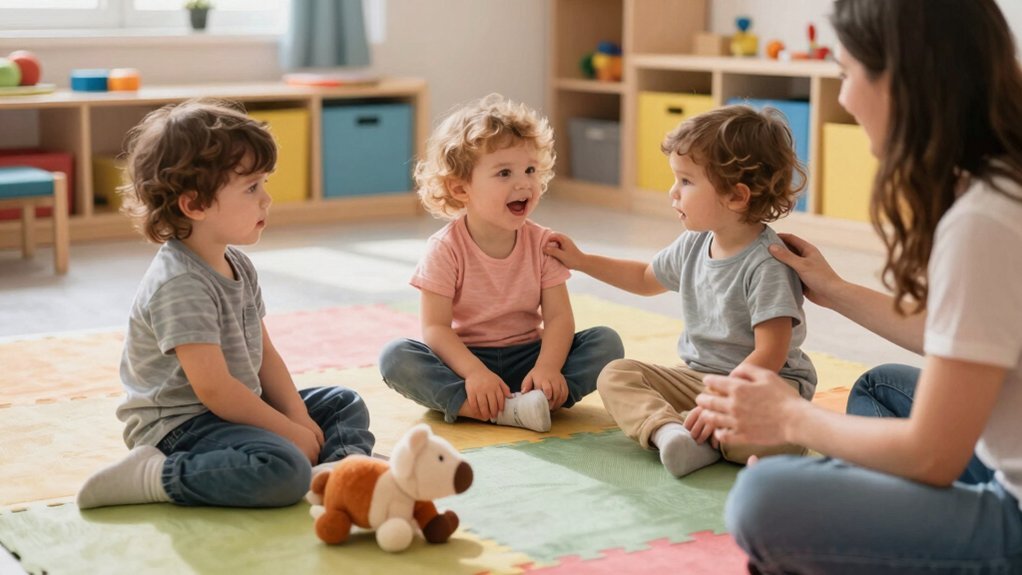
How can you help a 2‑3‑year‑old turn a fleeting feeling into a clear word? Start by labeling emotions yourself—“You look sad, want to say ‘I feel sad’?”—and repeat the phrase until it sticks. Model polite language and warm affection, using “please,” “thank you,” and gentle tones so the child hears a consistent example. Encourage two‑word requests like “more juice” or “play please,” reinforcing communication skills that support early childhood development. When conflicts arise, guide them to say “I’m upset” instead of hitting, and show how to apologize with “I’m sorry.” Use simple safety or social scenarios—sharing toys, taking turns—to practice positive interaction, building emotional literacy and polite language together. Providing organized storage with low toy rotation shelving systems can also help children access and put away toys independently, reinforcing responsibility and order.
School‑Readiness Milestones for 4‑10‑Year‑Olds
Ever wondered what concrete steps turn everyday play into solid school readiness for kids aged 4‑10? You can weave life skills into chores and routines that match each milestone. At age 4‑5, teach them to recognize letters with toys, recite their name, address, emergency number, and dust reachable surfaces or clear the table.
Weave everyday play into school‑readiness: teach letters, personal info, and simple chores to ages 4‑5.
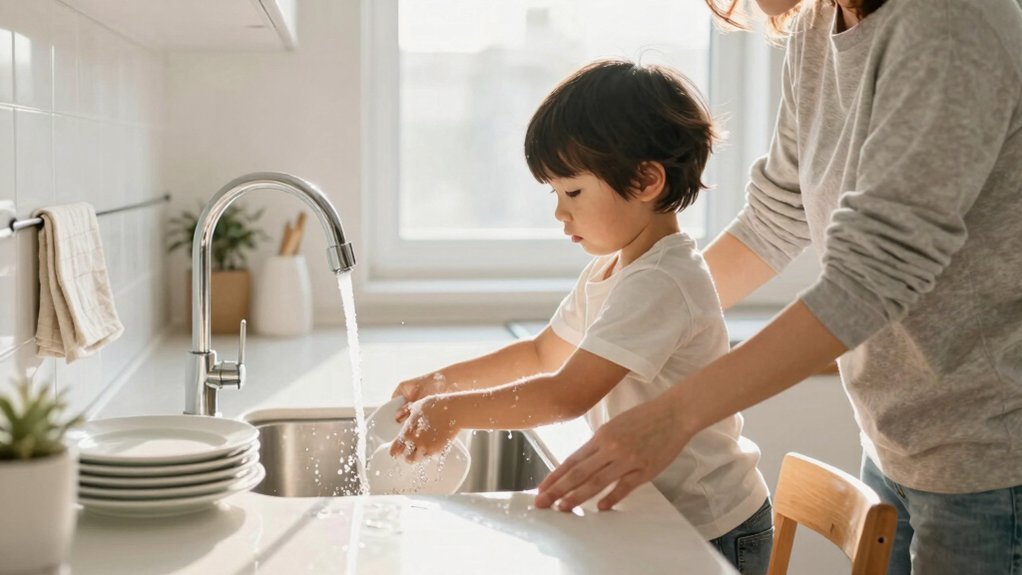
Ages 6‑7 bring basic cooking—mixing, stirring, using a dull knife—plus grocery putting away and dish washing.
By 8‑9, they should manage personal belongings, read a simple recipe, count change, and handle lawn duties or trash removal.
These school‑readiness tasks build confidence, independence, and the practical skills that prepare children for classroom success while reinforcing daily routines.
Using tools like Montessori-friendly kitchen helper towers can support children’s safe involvement and growth in these daily activities.
Age‑Appropriate Household Chores for 11‑14‑Year‑Olds
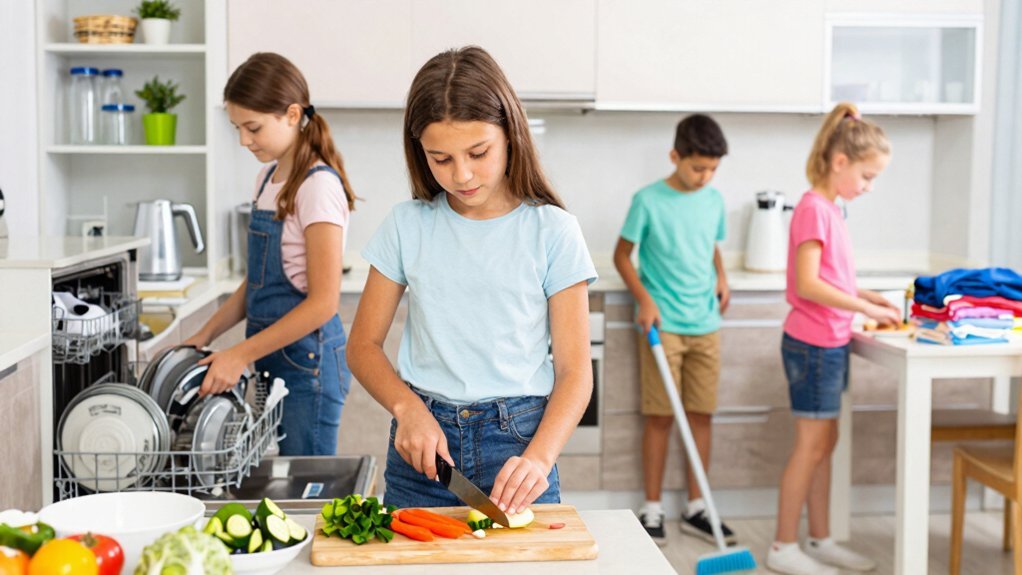
What chores can empower a 11‑ to‑14‑year‑old to gain real independence? You’ll see that life skills grow quickly when teens handle real household tasks. Start with laundry: load the washer, transfer to the dryer, fold, and even iron shirts. Next, let them tackle simple repairs—swap a light bulb, unclog a drain, or replace a vacuum bag. Finally, involve them in meal prep: read labels, follow a basic recipe, and use the oven for simple dishes. These responsibilities build confidence and consistency. For supporting their independence safely in the kitchen, consider age-appropriate tools like the Kitchen Step Stool for Kids with Safety Rail to help them reach counters securely.
Money Management & Tech Skills for 15‑18‑Year‑Olds
Ever wondered how the financial choices you make today shape the independence you’ll enjoy tomorrow? You can start mastering money management by tracking every expense with a prepaid debit card, setting weekly budgets, and using apps like GoHenry for real‑world practice. Treat each purchase as a budgeting exercise: allocate funds for groceries, lunches, and fun, then compare actual spending to your plan. Build financial literacy by setting long‑term goals—college, a car, or a trip—and watch your savings grow. Communicate your plan with parents or mentors, stay accountable, and develop critical thinking that will serve you in adulthood. Incorporating practical tools with quick response times can enhance your efficiency in managing daily tasks.
| Goal | Tool | Skill |
|---|---|---|
| Weekly allowance tracking | Prepaid debit card | Budgeting |
| Savings for a laptop | GoHenry app | Financial literacy |
| Grocery budgeting | Spreadsheet | Money management |
| Emergency fund | Savings account | Planning |
| Discretionary spending | Mobile alerts | Accountability |
Embedding Age‑Appropriate Life‑Skill Routines in Montessori Days
How can you weave everyday independence into a Montessori day? You start by matching tasks to developmental stages, turning routine moments into life‑skill practice. For toddlers, a small pitcher and a tidy‑up cue teach self‑service and responsibility. Older preschoolers learn name‑and‑address basics while dusting reachable shelves, reinforcing independence. Pre‑teens handle simple cooking, folding, and planning, building sequencing and executive function.
- 2–3 yr: pick up toys, place dirty clothes in a hamper, pour water.
- 4–5 yr: recite full name/address, dust low surfaces, clear the table.
- 6–13 yr: mix, stir, cut with a dull knife, make a sandwich, plan a simple meal.
These age‑appropriate routines embed Montessori principles, turning daily chores into structured, confidence‑building experiences. Introducing age-appropriate kitchen tools like child-safe whisks encourages hands-on learning and motor skill development.
Tracking Progress & Adapting Skills Over Time
You’ll regularly review goals, tweak skills, and celebrate milestones to keep motivation high.
By noting what’s working and what needs adjustment, you can fine‑tune tasks to match your child’s evolving abilities.
Each celebration reinforces confidence and signals it’s time to move on to the next challenge.
Goals Review
Where do you start when you need to gauge a child’s growing independence? Begin by mapping achievements onto age bands and noting where mastery of tasks sits. Use progress tracking to spot patterns, then run routine‑based assessments each week to verify consistency. Keep a simple log of successes and setbacks; that record guides the next coaching steps.
- Review the child’s performance in each age band (2–3, 4–5, 6–7, 7–10, 11–14, 15–18) and compare it with expected milestones.
- Conduct routine‑based assessments such as morning chores or time‑management drills to measure reliability.
- Update goals when mastery of tasks is evident, adding a slightly more complex responsibility to sustain motivation.
Skill Adjustments
When you track a child’s progress, you’ll notice a natural shift from simple, comfort‑level tasks to more demanding responsibilities, so mapping each skill to an age band lets you adjust complexity at just the right moment. Use age‑appropriate progress adaptation to guide the transition from picking up toys at two to budgeting basics by fourteen. Task sequencers start with comfort tasks—like pouring water—then layer in more complex steps, such as preparing a multi‑ingredient snack. Regular reassessment lets you trim support while offering clear guidance, fostering independence without overwhelm. Keep caregiver resources handy—PDFs, contact lists, checklists—to tailor the sequence to each child’s safety, ability, and learning pace, ensuring smooth, confident growth.
Milestone Celebrations
How can you turn everyday achievements into moments of genuine pride? By tracking milestones and weaving them into routines, you turn ordinary tasks into celebration opportunities that boost independence. Use a chore chart to mark each step, then pause to acknowledge progress. This habit teaches kids that growth is measurable and rewarding.
- Highlight a new skill, like dressing with help, and add a sticker to the chart.
- Upgrade a routine, such as moving from putting away toys to planning a simple snack.
- Celebrate a milestone of independence, like handling pocket money responsibly.
Adjust expectations as your child ages, keeping safety and comprehension front‑and‑center while letting them suggest the next skill they want to master. This dynamic approach keeps learning fresh and meaningful.
Frequently Asked Questions
How Do Cultural Differences Affect Age‑Appropriate Skill Timelines?
Cultural differences shift skill timelines; you’ll notice some societies expect independence earlier, while others prioritize collective responsibilities, so you adjust expectations based on local values, traditions, and family structures.
What Signs Indicate a Child Is Ready for a New Responsibility?
You’ll notice them asking questions, showing curiosity, completing tasks independently, handling minor setbacks calmly, and expressing pride in their work—these signals mean they’re ready for a new responsibility.
How Can Parents Balance Skill Learning With Academic Workload?
You balance skill learning and school by setting clear, realistic goals, scheduling short practice sessions, integrating chores into daily routines, and adjusting expectations when grades dip, keeping communication open and supportive.
What Role Should Siblings Play in Teaching Life Skills?
You should let siblings model behavior, share tasks, and give gentle feedback, because peer learning builds confidence, reinforces habits, and creates a supportive environment where practical skills spread naturally.
How to Handle Setbacks When a Child Resists a New Task?
You acknowledge the child’s frustration, pause the task, ask what’s bothering them, then break the activity into smaller steps, offering praise for each effort and keeping the tone supportive.


Leave a Reply